 Basic Math
  Pre Algebra
 Algebra I
  Algebra I
 Algebra II
  Geometry
  Trigonometry
  Precalculus
  Math Analysis
  AP Calculus AB
  AP Calculus BC
 AP Statistics
 Gen. Statistics
  Gen. Statistics
 Probability
  College Calculus: Level I
 College Calculus: Level II
  Multivariable Calculus
  Linear Algebra
  Differential Equations
  General Chemistry
  Gen. Chemistry
 AP Chemistry
  Biochemistry
  Organic Chemistry
  Organic Chemistry Lab
  Physical Chemistry
  Physics – High School (Theory & Application)
  AP Physics 1 & 2
  AP Physics C: Mechanics
  AP Physics C: Electricity & Magnetism
  AP Physics B
 AP Physics C: Mechanics
 AP Physics C: Electricity Magnetism
 Life Science (Middle School)
 Regular Biology
 Anatomy & Physiology
  General Biology
  AP Biology
  AP Environmental Science
 Microbiology
 Molecular Biology
  Intro to Psychology
 AP Psychology
 AP US History
 AP World History
 HTML Training
 HTML 5
 Intro to Ruby Programming
 Web Design & E-Commerce
 Introduction to C++
 Intermediate Level C++
 CSS Intro
 Java
Java
 AP CompSci: Intro to Java
 JavaScript
 Introduction to PHP
 Advanced PHP Training w/ mySQL
 C#
C#
 Visual Basic
 XML Training
 QuickBooks (How-To Guide)
 MATLAB
 Excel Power Query











 Adobe Dreamweaver CC
 Adobe Dreamweaver CS6
 Adobe Photoshop CS6
 Photoshop Designs to Code
 Edge Animate CC
 jQuery Mobile
 Adobe Illustrator CS6
 Adobe Premiere Pro CS6
 Adobe Premiere Elements 11
 ColdFusion 9
 ColdFusion 9: Application Framework
 Fireworks CS6: Web Workflow
 Adobe Photoshop Elements 11
 English Grammar
 Advanced English Grammar
 English Composition
 Application Essays
 AP English Language & Composition
 AP English Literature & Composition
 Shakespeare: Plays & Sonnets
 Reading Comprehension
 AP Spanish
 AP Studio Art 2-D
 Music Composition
 Music Theory
 Music History & Appreciation
 Learn Piano for Beatmakers and Producers
 Answer Engine

Professor Murray
Computations of Inverse Trigonometric Functions
Slide Duration:Table of Contents
Section 1: Trigonometric Functions
Angles
39m 5s
- Intro0:00
- Degrees0:22
- Circle is 360 Degrees0:48
- Splitting a Circle1:13
- Radians2:08
- Circle is 2 Pi Radians2:31
- One Radian2:52
- Half-Circle and Right Angle4:00
- Converting Between Degrees and Radians6:24
- Formulas for Degrees and Radians6:52
- Coterminal, Complementary, Supplementary Angles7:23
- Coterminal Angles7:30
- Complementary Angles9:40
- Supplementary Angles10:08
- Example 1: Dividing a Circle10:38
- Example 2: Converting Between Degrees and Radians11:56
- Example 3: Quadrants and Coterminal Angles14:18
- Extra Example 1: Common Angle Conversions-1
- Extra Example 2: Quadrants and Coterminal Angles-2
Sine and Cosine Functions
43m 16s
- Intro0:00
- Sine and Cosine0:15
- Unit Circle0:22
- Coordinates on Unit Circle1:03
- Right Triangles1:52
- Adjacent, Opposite, Hypotenuse2:25
- Master Right Triangle Formula: SOHCAHTOA2:48
- Odd Functions, Even Functions4:40
- Example: Odd Function4:56
- Example: Even Function7:30
- Example 1: Sine and Cosine10:27
- Example 2: Graphing Sine and Cosine Functions14:39
- Example 3: Right Triangle21:40
- Example 4: Odd, Even, or Neither26:01
- Extra Example 1: Right Triangle-1
- Extra Example 2: Graphing Sine and Cosine Functions-2
Sine and Cosine Values of Special Angles
33m 5s
- Intro0:00
- 45-45-90 Triangle and 30-60-90 Triangle0:08
- 45-45-90 Triangle0:21
- 30-60-90 Triangle2:06
- Mnemonic: All Students Take Calculus (ASTC)5:21
- Using the Unit Circle5:59
- New Angles6:21
- Other Quadrants9:43
- Mnemonic: All Students Take Calculus10:13
- Example 1: Convert, Quadrant, Sine/Cosine13:11
- Example 2: Convert, Quadrant, Sine/Cosine16:48
- Example 3: All Angles and Quadrants20:21
- Extra Example 1: Convert, Quadrant, Sine/Cosine-1
- Extra Example 2: All Angles and Quadrants-2
Modified Sine Waves: Asin(Bx+C)+D and Acos(Bx+C)+D
52m 3s
- Intro0:00
- Amplitude and Period of a Sine Wave0:38
- Sine Wave Graph0:58
- Amplitude: Distance from Middle to Peak1:18
- Peak: Distance from Peak to Peak2:41
- Phase Shift and Vertical Shift4:13
- Phase Shift: Distance Shifted Horizontally4:16
- Vertical Shift: Distance Shifted Vertically6:48
- Example 1: Amplitude/Period/Phase and Vertical Shift8:04
- Example 2: Amplitude/Period/Phase and Vertical Shift17:39
- Example 3: Find Sine Wave Given Attributes25:23
- Extra Example 1: Amplitude/Period/Phase and Vertical Shift-1
- Extra Example 2: Find Cosine Wave Given Attributes-2
Tangent and Cotangent Functions
36m 4s
- Intro0:00
- Tangent and Cotangent Definitions0:21
- Tangent Definition0:25
- Cotangent Definition0:47
- Master Formula: SOHCAHTOA1:01
- Mnemonic1:16
- Tangent and Cotangent Values2:29
- Remember Common Values of Sine and Cosine2:46
- 90 Degrees Undefined4:36
- Slope and Menmonic: ASTC5:47
- Uses of Tangent5:54
- Example: Tangent of Angle is Slope6:09
- Sign of Tangent in Quadrants7:49
- Example 1: Graph Tangent and Cotangent Functions10:42
- Example 2: Tangent and Cotangent of Angles16:09
- Example 3: Odd, Even, or Neither18:56
- Extra Example 1: Tangent and Cotangent of Angles-1
- Extra Example 2: Tangent and Cotangent of Angles-2
Secant and Cosecant Functions
27m 18s
- Intro0:00
- Secant and Cosecant Definitions0:17
- Secant Definition0:18
- Cosecant Definition0:33
- Example 1: Graph Secant Function0:48
- Example 2: Values of Secant and Cosecant6:49
- Example 3: Odd, Even, or Neither12:49
- Extra Example 1: Graph of Cosecant Function-1
- Extra Example 2: Values of Secant and Cosecant-2
Inverse Trigonometric Functions
32m 58s
- Intro0:00
- Arcsine Function0:24
- Restrictions between -1 and 10:43
- Arcsine Notation1:26
- Arccosine Function3:07
- Restrictions between -1 and 13:36
- Cosine Notation3:53
- Arctangent Function4:30
- Between -Pi/2 and Pi/24:44
- Tangent Notation5:02
- Example 1: Domain/Range/Graph of Arcsine5:45
- Example 2: Arcsin/Arccos/Arctan Values10:46
- Example 3: Domain/Range/Graph of Arctangent17:14
- Extra Example 1: Domain/Range/Graph of Arccosine-1
- Extra Example 2: Arcsin/Arccos/Arctan Values-2
Computations of Inverse Trigonometric Functions
31m 8s
- Intro0:00
- Inverse Trigonometric Function Domains and Ranges0:31
- Arcsine0:41
- Arccosine1:14
- Arctangent1:41
- Example 1: Arcsines of Common Values2:44
- Example 2: Odd, Even, or Neither5:57
- Example 3: Arccosines of Common Values12:24
- Extra Example 1: Arctangents of Common Values-1
- Extra Example 2: Arcsin/Arccos/Arctan Values-2
Section 2: Trigonometric Identities
Pythagorean Identity
19m 11s
- Intro0:00
- Pythagorean Identity0:17
- Pythagorean Triangle0:27
- Pythagorean Identity0:45
- Example 1: Use Pythagorean Theorem to Prove Pythagorean Identity1:14
- Example 2: Find Angle Given Cosine and Quadrant4:18
- Example 3: Verify Trigonometric Identity8:00
- Extra Example 1: Use Pythagorean Identity to Prove Pythagorean Theorem-1
- Extra Example 2: Find Angle Given Cosine and Quadrant-2
Identity Tan(squared)x+1=Sec(squared)x
23m 16s
- Intro0:00
- Main Formulas0:19
- Companion to Pythagorean Identity0:27
- For Cotangents and Cosecants0:52
- How to Remember0:58
- Example 1: Prove the Identity1:40
- Example 2: Given Tan Find Sec3:42
- Example 3: Prove the Identity7:45
- Extra Example 1: Prove the Identity-1
- Extra Example 2: Given Sec Find Tan-2
Addition and Subtraction Formulas
52m 52s
- Intro0:00
- Addition and Subtraction Formulas0:09
- How to Remember0:48
- Cofunction Identities1:31
- How to Remember Graphically1:44
- Where to Use Cofunction Identities2:52
- Example 1: Derive the Formula for cos(A-B)3:08
- Example 2: Use Addition and Subtraction Formulas16:03
- Example 3: Use Addition and Subtraction Formulas to Prove Identity25:11
- Extra Example 1: Use cos(A-B) and Cofunction Identities-1
- Extra Example 2: Convert to Radians and use Formulas-2
Double Angle Formulas
29m 5s
- Intro0:00
- Main Formula0:07
- How to Remember from Addition Formula0:18
- Two Other Forms1:35
- Example 1: Find Sine and Cosine of Angle using Double Angle3:16
- Example 2: Prove Trigonometric Identity using Double Angle9:37
- Example 3: Use Addition and Subtraction Formulas12:38
- Extra Example 1: Find Sine and Cosine of Angle using Double Angle-1
- Extra Example 2: Prove Trigonometric Identity using Double Angle-2
Half-Angle Formulas
43m 55s
- Intro0:00
- Main Formulas0:09
- Confusing Part0:34
- Example 1: Find Sine and Cosine of Angle using Half-Angle0:54
- Example 2: Prove Trigonometric Identity using Half-Angle11:51
- Example 3: Prove the Half-Angle Formula for Tangents18:39
- Extra Example 1: Find Sine and Cosine of Angle using Half-Angle-1
- Extra Example 2: Prove Trigonometric Identity using Half-Angle-2
Section 3: Applications of Trigonometry
Trigonometry in Right Angles
25m 43s
- Intro0:00
- Master Formula for Right Angles0:11
- SOHCAHTOA0:15
- Only for Right Triangles1:26
- Example 1: Find All Angles in a Triangle2:19
- Example 2: Find Lengths of All Sides of Triangle7:39
- Example 3: Find All Angles in a Triangle11:00
- Extra Example 1: Find All Angles in a Triangle-1
- Extra Example 2: Find Lengths of All Sides of Triangle-2
Law of Sines
56m 40s
- Intro0:00
- Law of Sines Formula0:18
- SOHCAHTOA0:27
- Any Triangle0:59
- Graphical Representation1:25
- Solving Triangle Completely2:37
- When to Use Law of Sines2:55
- ASA, SAA, SSA, AAA2:59
- SAS, SSS for Law of Cosines7:11
- Example 1: How Many Triangles Satisfy Conditions, Solve Completely8:44
- Example 2: How Many Triangles Satisfy Conditions, Solve Completely15:30
- Example 3: How Many Triangles Satisfy Conditions, Solve Completely28:32
- Extra Example 1: How Many Triangles Satisfy Conditions, Solve Completely-1
- Extra Example 2: How Many Triangles Satisfy Conditions, Solve Completely-2
Law of Cosines
49m 5s
- Intro0:00
- Law of Cosines Formula0:23
- Graphical Representation0:34
- Relates Sides to Angles1:00
- Any Triangle1:20
- Generalization of Pythagorean Theorem1:32
- When to Use Law of Cosines2:26
- SAS, SSS2:30
- Heron's Formula4:49
- Semiperimeter S5:11
- Example 1: How Many Triangles Satisfy Conditions, Solve Completely5:53
- Example 2: How Many Triangles Satisfy Conditions, Solve Completely15:19
- Example 3: Find Area of a Triangle Given All Side Lengths26:33
- Extra Example 1: How Many Triangles Satisfy Conditions, Solve Completely-1
- Extra Example 2: Length of Third Side and Area of Triangle-2
Finding the Area of a Triangle
27m 37s
- Intro0:00
- Master Right Triangle Formula and Law of Cosines0:19
- SOHCAHTOA0:27
- Law of Cosines1:23
- Heron's Formula2:22
- Semiperimeter S2:37
- Example 1: Area of Triangle with Two Sides and One Angle3:12
- Example 2: Area of Triangle with Three Sides6:11
- Example 3: Area of Triangle with Three Sides, No Heron's Formula8:50
- Extra Example 1: Area of Triangle with Two Sides and One Angle-1
- Extra Example 2: Area of Triangle with Two Sides and One Angle-2
Word Problems and Applications of Trigonometry
34m 25s
- Intro0:00
- Formulas to Remember0:11
- SOHCAHTOA0:15
- Law of Sines0:55
- Law of Cosines1:48
- Heron's Formula2:46
- Example 1: Telephone Pole Height4:01
- Example 2: Bridge Length7:48
- Example 3: Area of Triangular Field14:20
- Extra Example 1: Kite Height-1
- Extra Example 2: Roads to a Town-2
Vectors
46m 42s
- Intro0:00
- Vector Formulas and Concepts0:12
- Vectors as Arrows0:28
- Magnitude0:38
- Direction0:50
- Drawing Vectors1:16
- Uses of Vectors: Velocity, Force1:37
- Vector Magnitude Formula3:15
- Vector Direction Formula3:28
- Vector Components6:27
- Example 1: Magnitude and Direction of Vector8:00
- Example 2: Force to a Box on a Ramp12:25
- Example 3: Plane with Wind18:30
- Extra Example 1: Components of a Vector-1
- Extra Example 2: Ship with a Current-2
Section 4: Complex Numbers and Polar Coordinates
Polar Coordinates
1h 7m 35s
- Intro0:00
- Polar Coordinates vs Rectangular/Cartesian Coordinates0:12
- Rectangular Coordinates, Cartesian Coordinates0:23
- Polar Coordinates0:59
- Converting Between Polar and Rectangular Coordinates2:06
- R2:16
- Theta2:48
- Example 1: Convert Rectangular to Polar Coordinates6:53
- Example 2: Convert Polar to Rectangular Coordinates17:28
- Example 3: Graph the Polar Equation28:00
- Extra Example 1: Convert Polar to Rectangular Coordinates-1
- Extra Example 2: Graph the Polar Equation-2
Complex Numbers
35m 59s
- Intro0:00
- Main Definition0:07
- Number i0:23
- Complex Number Form0:33
- Powers of Imaginary Number i1:00
- Repeating Pattern1:43
- Operations on Complex Numbers3:30
- Adding and Subtracting Complex Numbers3:39
- Multiplying Complex Numbers4:39
- FOIL Method5:06
- Conjugation6:29
- Dividing Complex Numbers7:34
- Conjugate of Denominator7:45
- Example 1: Solve For Complex Number z11:02
- Example 2: Expand and Simplify15:34
- Example 3: Simplify the Powers of i17:50
- Extra Example 1: Simplify-1
- Extra Example 2: All Complex Numbers Satisfying Equation-2
Polar Form of Complex Numbers
40m 43s
- Intro0:00
- Polar Coordinates0:49
- Rectangular Form0:52
- Polar Form1:25
- R and Theta1:51
- Polar Form Conversion2:27
- R and Theta2:35
- Optimal Values4:05
- Euler's Formula4:25
- Multiplying Two Complex Numbers in Polar Form6:10
- Multiply r's Together and Add Exponents6:32
- Example 1: Convert Rectangular to Polar Form7:17
- Example 2: Convert Polar to Rectangular Form13:49
- Example 3: Multiply Two Complex Numbers17:28
- Extra Example 1: Convert Between Rectangular and Polar Forms-1
- Extra Example 2: Simplify Expression to Polar Form-2
DeMoivre's Theorem
57m 37s
- Intro0:00
- Introduction to DeMoivre's Theorem0:10
- n nth Roots3:06
- DeMoivre's Theorem: Finding nth Roots3:52
- Relation to Unit Circle6:29
- One nth Root for Each Value of k7:11
- Example 1: Convert to Polar Form and Use DeMoivre's Theorem8:24
- Example 2: Find Complex Eighth Roots15:27
- Example 3: Find Complex Roots27:49
- Extra Example 1: Convert to Polar Form and Use DeMoivre's Theorem-1
- Extra Example 2: Find Complex Fourth Roots-2
Loading...
This is a quick preview of the lesson. For full access, please Log In or Sign up.
For more information, please see full course syllabus of Trigonometry
For more information, please see full course syllabus of Trigonometry
Share this knowledge with your friends!

Copy & Paste this embed code into your website’s HTML
Please ensure that your website editor is in text mode when you paste the code.(In Wordpress, the mode button is on the top right corner.)
×
Since this lesson is not free, only the preview will appear on your website.
- - Allow users to view the embedded video in full-size.
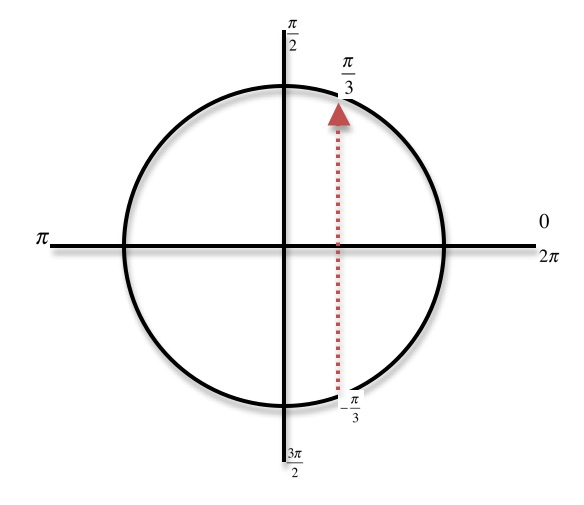



1 answer
Wed Jun 24, 2020 11:02 AM
Post by Victoria Su on June 23, 2020
Hello,
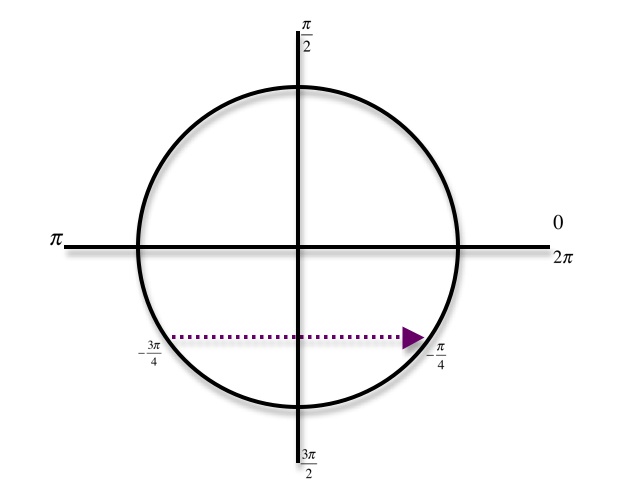
I am not quite sure how you got the answers for the arcsines, arccosines, and arctangents for the extra example 2. I understand the sine, cosine, and tangent values on the unit circle, I just don't know how you got the arcsine, arctangent, and arccosine.
1 answer
Fri Apr 3, 2020 10:02 AM
Post by Cheung Chun Hei on April 1, 2020
Hi professor Murray, I am not really familiar with Trigonometry. I can catch up the previous lesson but I am not understanding about example one in this lecture. How do you figure out those arcsine values?
1 answer
Mon Aug 4, 2014 8:19 PM
Post by adnan akram on July 17, 2014
In example 1 how 30 degrees is pi/3 and 60 degrees is also pi/3 why? according what I know 30 degrees is pi/6 and 60 is pi/3
Thank you!!
2 answers
Mon Oct 21, 2013 7:32 PM
Post by Robert Mills on October 15, 2013
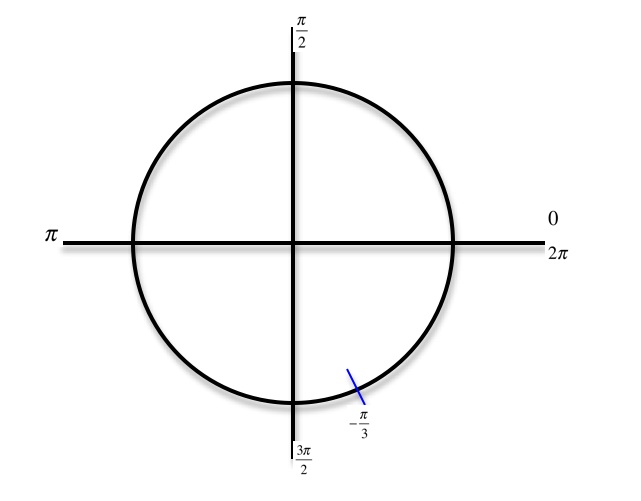
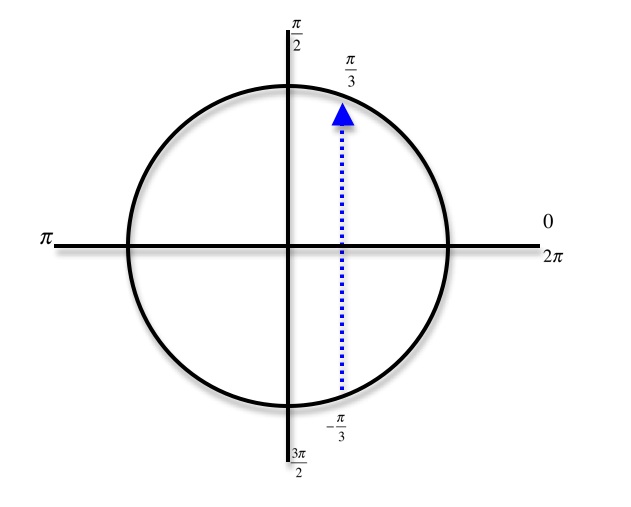
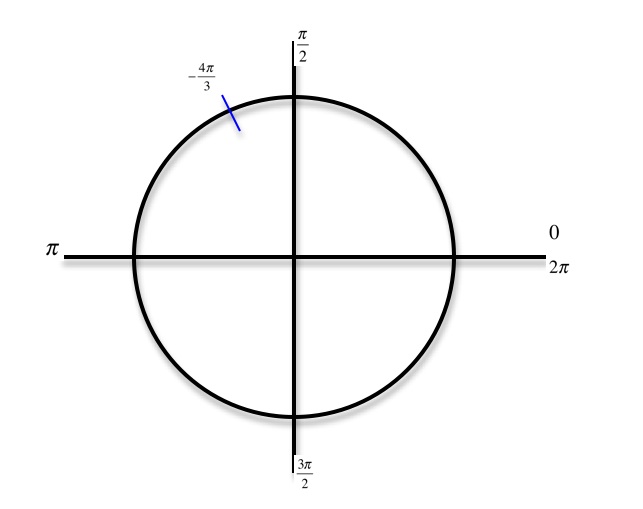
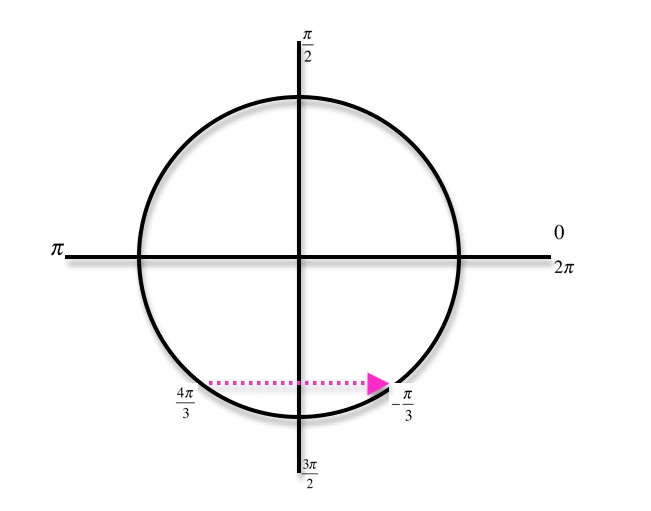
Between example 1 & 3, I'm confused as to why the arcsinx mirror eachother, meaning why is -1 arcsinx = -π/2, but 1 arcsinx = π/2? On the unit circle, the angle for 1 arcsinx reads 3π/2. I'm just missing some knowledge here, thank you!
1 answer
Wed Aug 14, 2013 12:25 PM
Post by Kiyoshi Smith on August 8, 2013
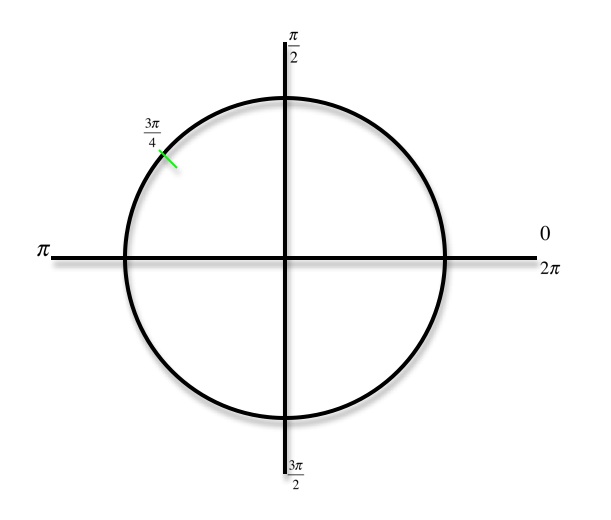
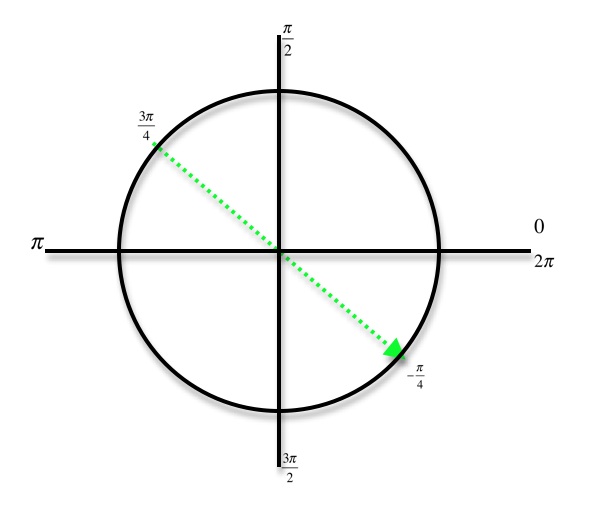
In Example 3 you give arcsin(-(2)^(1/2)/2) as 3pi/2 when it should be 3pi/4. I thought I should point this out.
4 answers
Thu Jul 18, 2013 8:26 AM
Post by Mark Mercready on December 22, 2011
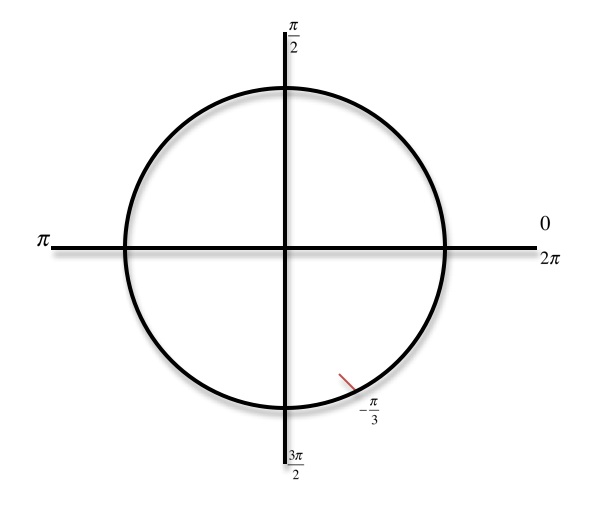
In Example 1 you give arcsin(-1/2) as -pi/3 when it should be pi/6. And for arcsin(1/2) you give pi/3 when it is pi/6. Please correct this.
1 answer
Wed Apr 3, 2013 11:34 AM
Post by Cain Blaha on November 28, 2011
how would you solve if the angle you were trying to find was not part of a special triangle?
Ex. sin(arccos(3/4))
1 answer
Wed Apr 3, 2013 11:27 AM
Post by Tanielle Spencer on October 28, 2011
my unit circle is not matching his although i follow his concept.
7 answers
Thu Mar 27, 2014 4:51 PM
Post by Hero Miles on May 15, 2011
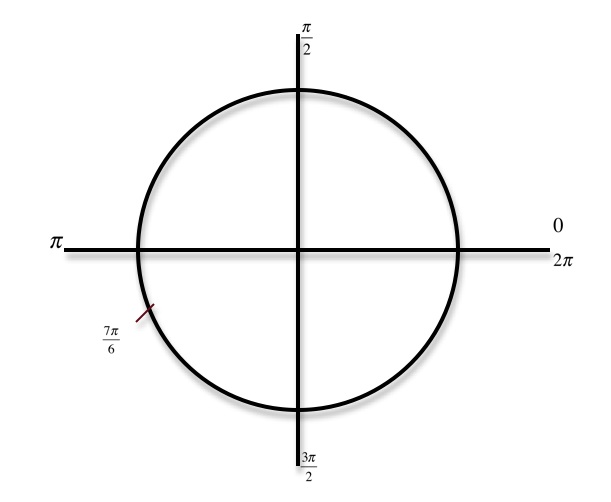
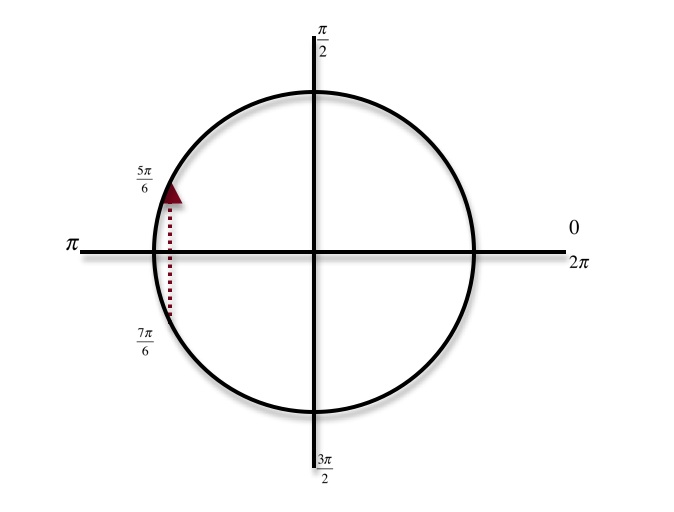
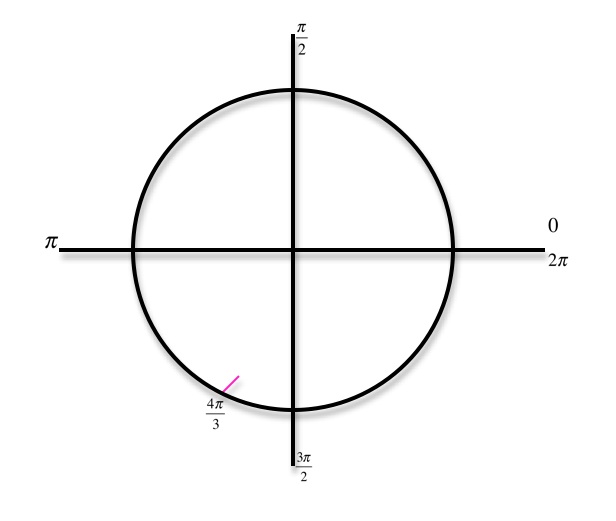
Timothy, 7pi/6 is on the unit circle. In order to solve your problem you have to evaluate sin 7pi/6 first. Then evaluate inverse cosine of that:
arcos(sin 7pi/6)= arcos(-1/2) = 2pi/3
Piece of cake.
1 answer
Wed Apr 3, 2013 11:24 AM
Post by Timothy Harris on February 18, 2011
this video is very helpful except, what about values that are no on the unit circle or the problems aren't exactly like what is shown
ex: arccos(sin 7pi/6)