 Basic Math
  Pre Algebra
 Algebra I
  Algebra I
 Algebra II
  Geometry
  Trigonometry
  Precalculus
  Math Analysis
  AP Calculus AB
  AP Calculus BC
 AP Statistics
 Gen. Statistics
  Gen. Statistics
 Probability
  College Calculus: Level I
 College Calculus: Level II
  Multivariable Calculus
  Linear Algebra
  Differential Equations
  General Chemistry
  Gen. Chemistry
 AP Chemistry
  Biochemistry
  Organic Chemistry
  Organic Chemistry Lab
  Physical Chemistry
  Physics – High School (Theory & Application)
  AP Physics 1 & 2
  AP Physics C: Mechanics
  AP Physics C: Electricity & Magnetism
  AP Physics B
 AP Physics C: Mechanics
 AP Physics C: Electricity Magnetism
 Life Science (Middle School)
 Regular Biology
 Anatomy & Physiology
  General Biology
  AP Biology
  AP Environmental Science
 Microbiology
 Molecular Biology
  Intro to Psychology
 AP Psychology
 AP US History
 AP World History
 HTML Training
 HTML 5
 Intro to Ruby Programming
 Web Design & E-Commerce
 Introduction to C++
 Intermediate Level C++
 CSS Intro
 Java
Java
 AP CompSci: Intro to Java
 JavaScript
 Introduction to PHP
 Advanced PHP Training w/ mySQL
 C#
C#
 Visual Basic
 XML Training
 QuickBooks (How-To Guide)
 MATLAB
 Excel Power Query











 Adobe Dreamweaver CC
 Adobe Dreamweaver CS6
 Adobe Photoshop CS6
 Photoshop Designs to Code
 Edge Animate CC
 jQuery Mobile
 Adobe Illustrator CS6
 Adobe Premiere Pro CS6
 Adobe Premiere Elements 11
 ColdFusion 9
 ColdFusion 9: Application Framework
 Fireworks CS6: Web Workflow
 Adobe Photoshop Elements 11
 English Grammar
 Advanced English Grammar
 English Composition
 Application Essays
 AP English Language & Composition
 AP English Literature & Composition
 Shakespeare: Plays & Sonnets
 Reading Comprehension
 AP Spanish
 AP Studio Art 2-D
 Music Composition
 Music Theory
 Music History & Appreciation
 Learn Piano for Beatmakers and Producers
 Answer Engine
Professor Jishi
Capacitor
Slide Duration:Table of Contents
Section 1: Mechanics
Introduction to Physics (Basic Math)
1h 17m 37s
- Intro0:00
- What is Physics?1:35
- Physicists and Philosophers1:57
- Differences Between2:48
- Experimental Observations3:20
- Laws (Mathematical)3:48
- Modification of Laws/Experiments4:24
- Example: Newton's Laws of Mechanics5:38
- Example: Einstein's Relativity6:18
- Units8:50
- Various Units9:37
- SI Units10:02
- Length (meter)10:18
- Mass (kilogram)10:35
- Time (second)10:51
- MKS Units (meter kilogram second)11:04
- Definition of Second11:55
- Definition of Meter14:06
- Definition of Kilogram15:21
- Multiplying/Dividing Units19:10
- Trigonometry Overview21:24
- Sine and Cosine21:31
- Pythagorean Theorem23:44
- Tangent24:15
- Sine and Cosine of Angles24:35
- Similar Triangles25:54
- Right Triangle (Oppposite, Adjacent, Hypotenuse)28:16
- Other Angles (30-60-90)29:16
- Law of Cosines31:38
- Proof of Law of Cosines33:03
- Law of Sines37:03
- Proof of Law of Sines38:03
- Scalars and Vectors41:00
- Scalar: Magnitude41:22
- Vector: Magnitude and Direction41:52
- Examples42:31
- Extra Example 1: Unit Conversion-1
- Extra Example 2: Law of Cosines-2
- Extra Example 3: Dimensional Analysis-3
Vector Addition
1h 10m 31s
- Intro0:00
- Graphical Method0:10
- Magnitude and Direction of Two Vectors0:40
- Analytical Method or Algebraic Method8:45
- Example: Addition of Vectors9:12
- Parallelogram Rule11:42
- Law of Cosines14:22
- Law of Sines18:32
- Components of a Vector21:35
- Example: Vector Components23:30
- Introducing Third Dimension31:14
- Right Handed System33:06
- Specifying a Vector34:44
- Example: Calculate the Components of Vector36:33
- Vector Addition by Means of Components41:23
- Equality of Vectors47:11
- Dot Product48:39
- Extra Example 1: Vector Addition-1
- Extra Example 2: Angle Between Vectors-2
- Extra Example 3: Vector Addition-3
Motion in One Dimension
1h 19m 35s
- Intro0:00
- Position, Distance, and Displacement0:12
- Position of the Object0:30
- Distance Travelled by The Object5:34
- Displacement of The Object9:05
- Average Speed Over a Certain Time Interval14:46
- Example Of an Object15:15
- Example: Calculating Average Speed20:19
- Average Velocity Over a Time Interval22:22
- Example Calculating Average Velocity of an Object22:45
- Instantaneous Velocity30:45
- Average Acceleration Over a Time Interval40:50
- Example: Average Acceleration of an Object42:01
- Instantaneous Acceleration47:17
- Example: Acceleration of Time T47:33
- Example with Realistic Equation49:52
- Motion With Constant Acceleration: Kinematics Equation53:39
- Example: Motion of an Object with Constant Acceleration53:55
- Extra Example 1: Uniformly Accelerated Motion-1
- Extra Example 2: Catching up with a Car-2
- Extra Example 3: Velocity and Acceleration-3
Kinematics Equation Of Calculus
59m
- Intro0:00
- The Derivative0:12
- Idea of a Derivative0:27
- Derivative of a function X= df/dx6:55
- Example: F(x)=Constant c7:22
- Example: F(x)= X9:37
- Example: F(x)= AX11:29
- Example: F(x)= X squared12:30
- Example: F(x)= X cubed15:23
- Example: F(x) =SinX16:24
- Example: F(x) =CosX16:30
- Product of Functions16:56
- Example: F(x) = X (squared) Sin X17:15
- Quotient Rule23:03
- Example: F(x)=uV-vU/V223:48
- Kinematics of Equation25:10
- First Kinematic Equation : V=Vo+aT31:13
- Extra Example 1: Particle on X-Axis-1
- Extra Example 2: Graphical Analysis-2
Freely Falling Objects
1h 28m 59s
- Intro0:00
- Acceleration Due to Gravity0:11
- Dropping an Object at Certain Height0:25
- Signs : V , A , D7:07
- Example: Shooting an Object Upwards7:34
- Example: Ground To Ground12:13
- Velocity at Maximum Height14:30
- Time From Ground to Ground23:10
- Shortcut: Calculate Time Spent in Air24:07
- Example: Object Short Downwards30:19
- Object Short Downwards From a Height H30:30
- Use of Quadratic Formula36:23
- Example: Bouncing Ball41:00
- Ball Released From Certain Height41:22
- Time Until Stationary43:10
- Coefficient of Restitution46:40
- Example: Bouncing Ball. Continued53:02
- Extra Example 1: Object Shot Off Cliff-1
- Extra Example 2: Object Released Off Roof-2
- Extra Example 3: Rubber Ball (Coefficient of Restitution)-3
Motion in Two Dimensions, Part 1
1h 8m 38s
- Intro0:00
- Position, Displacement, Velocity, Acceleration0:10
- Position of an Object in X-Y Plane0:19
- Displacement of an Object2:48
- Average Velocity4:30
- Instantaneous Velocity at Time T5:22
- Acceleration of Object8:49
- Projectile Motion9:57
- Object Shooting at Angle10:15
- Object Falling Vertically14:48
- Velocity of an Object18:17
- Displacement of an Object19:20
- Initial Velocity Remains Constant21:24
- Deriving Equation of a Parabola25:23
- Example: Shooting a Soccer Ball25:25
- Time Ball Spent in Air (Ignoring Air Resistance)27:48
- Range of Projectile34:49
- Maximum Height Reached by the Projectile36:25
- Example: Shooting an Object Horizontally40:38
- Time Taken for Shooting42:34
- Range46:01
- Velocity Hitting Ground46:30
- Extra Example 1: Projectile Shot with an Angle-1
- Extra Example 2: What Angle-2
Motion in Two Dimensions, Part 2: Circular Dimension
1h 1m 54s
- Intro0:00
- Uniform Circular Motion0:15
- Object Moving in a Circle at Constant Speed0:26
- Calculation Acceleration3:30
- Change in Velocity3:45
- Magnitude of Acceleration14:21
- Centripetal Acceleration18:15
- Example: Earth Rotating Around The Sun18:42
- Center of the Earth20:45
- Distance Travelled in Making One Revolution21:34
- Acceleration of the Revolution23:37
- Tangential Acceleration and Radial Acceleration25:35
- If Magnitude and Direction Change During Travel26:22
- Tangential Acceleration27:45
- Example: Car on a Curved Road29:50
- Finding Total Acceleration at Time T if Car is at Rest31:13
- Extra Example 1: Centripetal Acceleration on Earth-1
- Extra Example 2: Pendulum Acceleration-2
- Extra Example 3: Radius of Curvature-3
Newton's Laws of Motion
1h 29m 51s
- Intro0:00
- Force0:21
- Contact Force (Push or Pull)1:02
- Field Forces1:49
- Gravity2:06
- Electromagnetic Force2:43
- Strong Force4:12
- Weak Force5:17
- Contact Force as Electromagnetic Force6:08
- Focus on Contact Force and Gravitational Force6:50
- Newton's First Law7:37
- Statement of First Law of Motion7:50
- Uniform Motion (Velocity is Constant)9:38
- Inertia10:39
- Newton's Second Law11:19
- Force as a Vector11:35
- Statement of Second Law of Motion12:02
- Force (Formula)12:22
- Example: 1 Force13:04
- Newton (Unit of Force)13:31
- Example: 2 Forces14:09
- Newton's Third Law19:38
- Action and Reaction Law19:46
- Statement of Third Law of Motion19:58
- Example: 2 Objects20:15
- Example: Objects in Contact21:54
- Example: Person on Earth22:54
- Gravitational Force and the Weight of an Object24:01
- Force of Attraction Formula24:42
- Point Mass and Spherical Objects26:56
- Example: Gravity on Earth28:37
- Example: 1 kg on Earth35:31
- Friction37:09
- Normal Force37:14
- Example: Small Force40:01
- Force of Static Friction43:09
- Maximum Force of Static Friction46:03
- Values of Coefficient of Static Friction47:37
- Coefficient of Kinetic Friction47:53
- Force of Kinetic Friction48:27
- Example: Horizontal Force49:36
- Example: Angled Force52:36
- Extra Example 1: Wire Tension-1
- Extra Example 2: Car Friction-2
- Extra Example 3: Big Block and Small Block-3
Applications of Newton's Laws, Part 1: Inclines
1h 24m 35s
- Intro0:00
- Acceleration on a Frictionless Incline0:35
- Force Action on the Object(mg)1:31
- Net Force Acting on the Object2:20
- Acceleration Perpendicular to Incline8:45
- Incline is Horizontal Surface11:30
- Example: Object on an Inclined Surface13:40
- Rough Inclines and Static Friction20:23
- Box Sitting on a Rough Incline20:49
- Maximum Values of Static Friction25:20
- Coefficient of Static Friction27:53
- Acceleration on a Rough Incline29:00
- Kinetic Friction on Rough Incline29:15
- Object Moving up the Incline33:20
- Net force on the Object36:36
- Example: Time to Reach the Bottom of an Incline41:50
- Displacement is 5m Down the Incline45:26
- Velocity of the Object Down the Incline47:49
- Extra Example 1: Bottom of Incline-1
- Extra Example 2: Incline with Initial Velocity-2
- Extra Example 3: Moving Down an Incline-3
Applications of Newton's Laws, Part 2: Strings and Pulleys
1h 10m 3s
- Intro0:00
- Atwood's Machine0:19
- Object Attached to a String0:39
- Tension on a String2:15
- Two Objects Attached to a String2:23
- Pulley Fixed to the Ceiling, With Mass M1 , M24:53
- Applying Newton's 2nd Law to Calculate Acceleration on M1, M29:21
- One Object on a Horizontal Surface: Frictionless Case17:36
- Connecting Two Unknowns, Tension and Acceleration20:27
- One Object on a Horizontal Surface: Friction Case23:57
- Two Objects Attached to a String with a Pulley24:14
- Applying Newton's 2nd Law26:04
- Tension of an Object Pulls to the Right27:31
- One of the Object is Incline : Frictionless Case32:59
- Sum of Two Forces on Mass M234:39
- If M1g is Larger Than M2g36:29
- One of the Object is Incline : Friction Case40:29
- Coefficient of Kinetic Friction41:18
- Net Force Acting on M245:12
- Extra Example 1: Two Masses on Two Strings-1
- Extra Example 2: Three Objects on Rough Surface-2
- Extra Example 3: Acceleration of a Block-3
Accelerating Frames
1h 13m 28s
- Intro0:00
- What Does a Scale Measure0:11
- Example: Elevator on a Scale0:22
- Normal Force4:57
- Apparent Weight in an Elevator7:42
- Example: Elevator Starts Moving Upwards9:05
- Net Force (Newton's Second Law)11:34
- Apparent Weight14:36
- Pendulum in an Accelerating Train15:58
- Example: Object Hanging on the Ceiling of a Train16:15
- Angle In terms of Increased Acceleration22:04
- Mass and Spring in an Accelerating Truck23:40
- Example: Spring on a Stationary Truck23:55
- Surface of Truck is Frictionless27:38
- Spring is Stretched by distance X28:40
- Cup of Coffee29:55
- Example: Moving Train and Stationary Objects inside Train30:05
- Train Moving With Acceleration A32:45
- Force of Static Friction Acting on Cup36:30
- Extra Example 1: Train Slows with Pendulum-1
- Extra Example 2: Person in Elevator Releases Object-2
- Extra Example 3: Hanging Object in Elevator-3
Circular Motion, Part 1
1h 1m 15s
- Intro0:00
- Object Attached to a String Moving in a Horizontal Circle0:09
- Net Force on Object (Newton's Second Law)1:51
- Force on an Object3:03
- Tension of a String4:40
- Conical Pendulum5:40
- Example: Object Attached to a String in a Horizontal Circle5:50
- Weight of an Object Vertically Down8:05
- Velocity And Acceleration in Vertical Direction11:20
- Net Force on an Object13:02
- Car on a Horizontal Road16:09
- Net Force on Car (Net Vertical Force)18:03
- Frictionless Road18:43
- Road with Friction22:41
- Maximum Speed of Car Without Skidding26:05
- Banked Road28:13
- Road Inclined at an Angle ø28:32
- Force on Car29:50
- Frictionless Road30:45
- Road with Friction36:22
- Extra Example 1: Object Attached to Rod with Two Strings-1
- Extra Example 2: Car on Banked Road-2
- Extra Example 3: Person Held Up in Spinning Cylinder-3
Circular Motion, Part 2
50m 29s
- Intro0:00
- Normal Force by a Pilot Seat0:14
- Example : Pilot Rotating in a Circle r and Speed s0:33
- Pilot at Vertical Position in a Circle of Radius R4:18
- Net Force on Pilot Towards Center (At Bottom)5:53
- Net Force on Pilot Towards Center (At Top)7:55
- Object Attached to a String in Vertical Motion10:46
- Example: Object in a Circle Attached to String10:59
- Case 1: Object with speed v and Object is at Bottom11:30
- Case 2: Object at Top in Vertical Motion15:24
- Object at Angle ø (General Position)17:48
- 2 Radial Forces (Inward & Outward)20:32
- Tension of String23:44
- Extra Example 1: Pail of Water in Vertical Circle-1
- Extra Example 2: Roller Coaster Vertical Circle-2
- Extra Example 3: Bead in Frictionless Loop-3
Work
1h 27m 50s
- Work Done by a Constant Force0:09
- Example: Force f on Object Moved a Displacement d in Same Direction0:24
- Force Applied on Object at Angle ø and Displacement d2:00
- Work Done3:59
- Force Perpendicular to Displacement (No Work)5:40
- Example: Lifting an Object from the Surface of Earth to Height h5:58
- Total Work Done7:39
- Example: Object on an Inclined Surface8:08
- Example: Object on Truck10:18
- Work Done on a Box with No Friction11:05
- Work Done with Static Friction14:38
- Stretching or Compressing a Spring14:50
- Example: Stretching a Spring15:20
- Work Done in Stretching a Spring15:51
- Spring Stretched Amount A17:00
- Spring Stretched Amount B With Constant Velocity17:59
- Force at Starting19:29
- Force at End19:51
- Total Displacement20:43
- Average Force21:20
- Work Done21:51
- Compressing a Spring23:32
- Work Kinetic Energy Theorem24:02
- Object Mass M on Frictionless Surface24:32
- Object Moved a Displacement d With Acceleration a26:20
- Work Done on an Object by Net Force (Kinetic Energy Theorem)28:41
- Example: Object at Height30:39
- Force on Object32:25
- Work Energy Theorem34:14
- Block Pulled on a Rough Horizontal Surface35:14
- Object on a Surface with Friction35:26
- Coefficient of Kinetic Friction35:50
- Work Done by Net Force = Change in K.E38:09
- Applying a Force on an Object at an Angle ø and Displacement d39:40
- Net Force43:30
- Work Done44:03
- Potential Energy of a System44:39
- Potential Energy of Two or More Objects45:28
- Example: Object of Mass m at Height h46:15
- Earth and Object in Position46:56
- Potential Energy, u=mgh49:05
- Absolute Value of Potential Energy49:55
- Example: Two Objects at Different Heights50:47
- Elastic Potential Energy in a Spring Block System52:03
- Example: Spring of Mass m Stretching52:30
- Work Done Stretching a Spring54:29
- Power55:24
- Work Done by an Object56:13
- Rate of Doing Work56:41
- Extra Example 1: Work Done, Block on Horizontal Surface-1
- Extra Example 2: Object and Compressed Spring-2
- Extra Example 3: Person Running-3
Conservation of Energy, Part 1
1h 24m 49s
- Intro0:00
- Total Energy of an Isolated System0:13
- Example: Object in an Empty Space2:22
- Force Applied on an Object3:25
- Hot Object t in Vacuum4:09
- Hot Object Placed in Cold Water5:32
- Isolated System (Conservation of Energy)7:15
- Example: Earth and Object (Isolated System)8:29
- Energy May be Transformed from One Form to Another13:05
- Forms of Energy13:30
- Example: Earth Object System14:17
- Example: Object Falls from Height h (Transform of Energy)16:12
- Example: Object Moving on a Rough Surface17:54
- Spring-Block System: Horizontal System20:52
- Example: System of Block & Spring21:03
- Conservation of Energy26:49
- Velocity of Object at Any Point27:39
- Spring-Loaded Gun Shot Upwards29:02
- Example: Spring on a Surface Being Compressed29:19
- Speed of Pendulum37:43
- Example: Object Suspended from Ceiling with String38:07
- Swinging the Pendulum at Angle ø From Rest39:00
- Cart on a Circular Track: Losing Contact45:47
- Example: Cart on Circular Track (Frictionless)46:13
- When Does the Cart Lose Contact49:16
- Setting Fn=0 When an Object Loses Contact52:51
- Velocity of anObject at Angle ø (Conservation of Energy)53:47
- Extra Example 1: Mass on Track to Loop-1
- Extra Example 2: Pendulum Released from Rest-2
- Extra Example 3: Object Dropped onto Spring-3
Conservation of Energy, Part 2
1h 2m 52s
- Intro0:00
- Block Spring Collision0:16
- Spring Attached to Mass0:31
- Frictionless Surface0:51
- Object Collides with a Spring and Stops1:51
- Amount of Compression in a Spring3:39
- Surface with Friction4:17
- Object Collidse with Spring (Object Stops at Collision)4:51
- Force of Friction9:18
- Object Sliding Down an Incline10:58
- Example: Object on Inclined Surface11:15
- Frictionless Case to Find Velocity of an Object12:08
- Object at Rough Inclined Surface(Friction Case)14:52
- Heat Produced16:30
- Object Arrives at Lesser Speed with Friction21:11
- Connected Object in Motion22:35
- Two Objects Connected Over a Pulley ,Spring Connected to One Object22:47
- Coefficient of Friction (Initial & Final Configuration at Rest)25:27
- Object of m1 at Height h27:40
- If No Friction29:51
- Amount of Heat Produced In Presence of Friction30:31
- Extra Example 1: Objects and Springs-1
- Extra Example 2: Mass against Horizontal Spring-2
Collisions, Part 1
1h 31m 19s
- Intro0:00
- Linear Momentum0:10
- Example: Object of Mass m with Velocity v0:25
- Example: Object Bounced on a Wall1:08
- Momentum of Object Hitting a Wall2:20
- Change in Momentum4:10
- Force is the Rate of Change of Momentum4:30
- Force=Mass*Acceleration (Newton's Second Law)4:45
- Impulse10:24
- Example: Baseball Hitting a Bat10:40
- Force Applied for a Certain Time11:50
- Magnitude Plot of Force vs Time13:35
- Time of Contact of Baseball = 2 milliseconds (Average Force by Bat)17:42
- Collision Between Two Particles22:40
- Two Objects Collide at Time T23:00
- Both Object Exerts Force on Each Other (Newton's Third Law)24:28
- Collision Time25:42
- Total Momentum Before Collision = Total momentums After Collision32:52
- Collision33:58
- Types of Collisions34:13
- Elastic Collision ( Mechanical Energy is Conserved)34:38
- Collision of Particles in Atoms35:50
- Collision Between Billiard Balls36:54
- Inelastic Collision (Rubber Ball)39:40
- Two Objects Collide and Stick (Completely Inelastic)40:35
- Completely Inelastic Collision41:07
- Example: Two Objects Colliding41:23
- Velocity After Collision42:14
- Heat Produced=Initial K.E-Final K.E47:13
- Ballistic Pendulum47:37
- Example: Determine the Speed of a Bullet47:50
- Mass Swings with Bulled Embedded49:20
- Kinetic Energy of Block with the Bullet50:28
- Extra Example 1: Ball Strikes a Wall-1
- Extra Example 2: Clay Hits Block-2
- Extra Example 3: Bullet Hits Block-3
- Extra Example 4: Child Runs onto Sled-4
Collisions, Part 2
1h 18m 48s
- Intro0:00
- Elastic Collision: One Object Stationary0:28
- Example: Stationary Object and Moving Object0:42
- Conservation of Momentum2:48
- Mechanical Energy Conservation3:43
- Elastic Collision: Both Objects Moving17:34
- Example: Both Objects Moving Towards Each Other17:48
- Kinetic Energy Conservation19:20
- Collision With a Spring-Block System29:17
- Example: Object of Mass Moving with Velocity29:30
- Object Attached to Spring of Mass with Velocity29:50
- Two Objects Attached to a Spring31:30
- Compression of Spring after Collision33:41
- Before Collision: Total Energy (Conservation of Energy)37:25
- After Collision: Total Energy38:49
- Collision in Two Dimensions42:29
- Object Stationary and Other Object is Moving42:46
- Head on Collision (In 1 Dimension)44:07
- Momentum Before Collision45:45
- Momentum After Collision46:06
- If Collision is Elastic (Conservation of Kinetic Energy) Before Collision50:29
- Example51:58
- Objects Moving in Two Directions52:33
- Objects Collide and Stick Together (Inelastic Collision)53:28
- Conservation of Momentum54:17
- Momentum in X-Direction54:27
- Momentum in Y-Direction56:15
- Maximum Height after Collision-1
- Extra Example 2: Two Objects Hitting a Spring-2
- Extra Example 3: Mass Hits and Sticks-3
Rotation of a Rigid Body About a Fixed Axis
1h 13m 20s
- Intro0:00
- Particle in Circular Motion0:11
- Specify a Position of a Particle0:55
- Radian3:02
- Angular Displacement8:50
- Rotation of a Rigid Body15:36
- Example: Rotating Disc16:17
- Disk at 5 Revolution/Sec17:24
- Different Points on a Disk Have Different Speeds21:56
- Angular Velocity23:03
- Constant Angular Acceleration: Kinematics31:11
- Rotating Disc31:42
- Object Moving Along x-Axis (Linear Case)33:05
- If Alpha= Constant35:15
- Rotational Kinetic Energy42:11
- Rod in X-Y Plane, Fixed at Center42:43
- Kinetic Energy46:45
- Moment of Inertia52:46
- Moment of Inertia for Certain Shapes54:06
- Rod at Center54:47
- Ring55:45
- Disc56:35
- Cylinder56:56
- Sphere57:20
- Extra Example 1: Rotating Wheel-1
- Extra Example 2: Two Spheres Attached to Rotating Rod-2
Static Equilibrium
1h 38m 57s
- Intro0:00
- Torque0:09
- Introduction to Torque0:16
- Rod in X-Y Direction0:30
- Particle in Equilibrium18:15
- Particle in Equilibrium, Net Force=018:30
- Extended Object Like a Rod19:13
- Conditions of Equilibrium26:34
- Forces Acting on Object (Proof of Torque)31:46
- The Lever35:38
- Rod on Lever with Two Masses35:51
- Standing on a Supported Beam40:53
- Example : Wall and Beam Rope Connect Beam and Wall41:00
- Net Force45:38
- Net Torque48:33
- Finding ø52:50
- Ladder About to Slip53:38
- Example: Finding Angle ø Where Ladder Doesn't slip53:44
- Extra Example 1: Bear Retrieving Basket-1
- Extra Example 2: Sliding Cabinet-2
Simple Harmonic Motion
1h 33m 39s
- Intro0:00
- (Six x)/x0:09
- (Sin x)/x Lim-->00:17
- Definition of Sine5:57
- Sine Expressed in Radians8:09
- Example: Sin(5.73)9:26
- Derivative Sin(Ax+b)12:14
- f(x)=Sin(ax+b)13:11
- Sin(α+β)14:56
- Derivative Cos(Ax+b)20:05
- F(x)=Cos(Ax+b)20:10
- Harmonic Oslillation: Equation of Motion26:00
- Example: Object Attached to Spring26:25
- Object is Oscillating27:04
- Force Acting on Object F=m*a31:21
- Equation of Motion34:41
- Solution to The Equation of Motion36:40
- x(t) Funtion of time38:50
- x=Cos(ωt+ø) Taking Derivative41:33
- Period50:37
- Pull The Spring With Mass and Time t Released50:54
- Calculating Time Period =A cos(ωt - φ)52:53
- Energy of Harmonic Oscillator55:59
- Energy of The Oscillator56:58
- Pendulum58:10
- Mass Attached to String and Swing58:20
- Extra Example 1: Two Springs Attached to Wall-1
- Extra Example 2: Simple Pendulum-2
- Extra Example 3: Block and Spring Oscillation-3
Universal Gravitation
1h 9m 20s
- Intro0:00
- Newton's Law of Gravity0:09
- Two Particles of Mass m1,m21:22
- Force of Attraction3:02
- Sphere and Small Particle of Mass m4:39
- Two Spheres5:35
- Variation of g With Altitude7:24
- Consider Earth as an Object7:33
- Force Applied To Object9:27
- At or Near Surface of Earth11:51
- Satellites15:39
- Earth and Satellite15:45
- Geosynchronous Satellite21:25
- Gravitational Potential Energy27:32
- Object and Earth Potential Energy=mgh24:45
- P.E=0 When Objects are Infinitely Separated30:32
- Total Energy38:28
- If Object is Very Far From Earth, R=Infinity40:25
- Escape42:33
- Shoot an Object Which Should Not Come Back Down43:06
- Conservation of Energy48:48
- Object at Maximum Height (K.E=0)45:22
- Escape Velocity (Rmax = Infinity)46:50
- Extra Example 1: Density of Earth and Moon-1
- Extra Example 2: Satellite Orbiting Earth-2
Fluids: Statics
1h 41m
- Intro0:00
- Mass Density0:23
- Density of Mass Solid0:33
- Density of Liquid1:06
- Density of Gas1:22
- Density of Aluminium2:03
- Desnsity of Water2:34
- Density of Air2:45
- Example: Room3:11
- Pressure4:59
- Pressure at Different Points in Liquid5:09
- Force on Face of Cube6:40
- Molecules Collide on Face of Cube9:34
- Newton's Third Law10:20
- Variation of Pressure With Depth15:12
- Atmospheric Pressure16:08
- Cylinder in a Fluid of Height H19:40
- Hydraulic Press29:50
- Fluid Cylider30:12
- Hydraulics35:56
- Archimedes Principle40:23
- Object in a Fluid (Submerged)40:55
- Volume of a Cylinder45:24
- Mass of Displaced Fluid45:48
- Buoyant Force47:30
- Weighing a Crown51:03
- Crown Suspended on Scale in Air51:24
- Crown Weighed in Water51:42
- Density of Gold57:20
- Extra Example 1: Aluminum Ball in Water-1
- Extra Example 2: Swimming Pool-2
- Extra Example 3: Helium Balloon-3
- Extra Example 4: Ball in Water-4
Fluids in Motion
1h 8m 43s
- Intro0:00
- Ideal Fluid Flow0:15
- Fluid Flow is Steady0:57
- Fluid is Incompressable (Density is Uniform)2:50
- Fluid Flow is Non-Viscous3:49
- Honey4:10
- Water4:32
- Fluid Flow (Rotational)6:15
- Equation of Continuity9:05
- Fluid Flowing in a Pipe9:20
- Fluid Entering Pipe11:00
- Fluid Leaving Pipe15:26
- Garden Hose21:20
- Filling a Bucket22:30
- Speed of Water24:05
- Bernoulli's Equation28:45
- Pipe Varying with Height and Cross Section29:18
- Net Work Done35:37
- Venturi Tube43:31
- Finding V1, V2 with Two Unknowns46:20
- Equation of Continutity46:55
- Extra Example 1: Water in a Pipe-1
- Extra Example 2: Water Tank with Hole-2
Section 2: Thermodynamics
Temperature
1h 16m 17s
- Intro0:00
- Celsius and Fahrenheit0:20
- Thermometer in Ice Water1:03
- Thermometer in Boiling Water3:03
- Celsius to Fahrenheit Conversion10:30
- Kelvin Temperature Scale11:15
- Constant Volume Gas Thermometer11:57
- Measuring Temperature of Liquid12:25
- Temperature Increase, Pressure Increase14:56
- Absolute Zero -273.15 Degree/Celsius22:34
- Thermometers25:44
- Thermometric Property26:14
- Constant Volume Gas Thermometer27:53
- Example: Electrical Resistance29:05
- Linear Thermal Expansion31:40
- Heated Metal Rod31:58
- Expansion of Holes41:05
- Sheet of Some Substance and Heat it41:16
- Sheet with Hole42:04
- As Temperature Increases, Hole Expands46:42
- Volume Thermal Expansion47:02
- Cube of Aluminum47:14
- Water Expands More than Glass53:44
- Behavior of Water Near 4c54:33
- Plotting the Density of Water54:55
- Extra Example 1: Volume of Diesel Fuel-1
- Extra Example 2: Brass Pendulum-2
Heat
1h 22m 1s
- Intro0:00
- Heat and Internal Energy0:09
- Cup of Hot Tea, Object is Hot0:50
- Heat Flows From Hot Object to Cold Object3:06
- Internal Energy , Kinetic+Potential Energy of All Atoms5:50
- Specific Heat9:01
- Object of Substance9:18
- Temperature Change by Delta T10:03
- Mass of Water17:29
- Calorimeter21:35
- Calorimeter-Thermal Insulated Container22:23
- Latent Heat30:23
- Ice at 0 degrees30:52
- Heating the Ice31:15
- Water-Latent Heat of Fusion33:50
- Converting Ice from -20 to 0 Degree38:35
- Example: Ice Water42:10
- Water of Mass 0.2 Kg42:23
- Mass of Ice that is Melted48:23
- Transfer Of Heat48:27
- Convection Mass Moment49:00
- Conduction53:14
- Radiation57:42
- Extra Example 1: Electric Heater with Water-1
- Extra Example 2: Mass of Steam-2
- Extra Example 3: Water in Pool-3
Kinetic Theory of Gases
1h 14m 37s
- Intro0:00
- Ideal Gas Law0:08
- Ideal Gas Definition0:24
- 1 Mole of Gas1:49
- Avogadro's Number2:21
- Gas in a Container, Pressure Increases with Temperature6:22
- Ideal Gas law10:30
- Boltzmann's Constant12:49
- Example13:30
- Conceptual Example13:48
- Shake and Open the Coke Bottle14:36
- Quantitative Example: Container with Gas19:50
- Heat the Gas to 127 Degrees20:23
- Kinetic Theory24:06
- Container in a Cube Shape24:16
- Molecules Travelling with Velocity v26:01
- Change in Momentum of Molecule Per Second30:38
- Newton's Third law31:58
- Example45:40
- 5 Moles of Helium in Container45:50
- Finding Number of Atoms47:23
- Calculating Pressure48:46
- Distribution of Molecules49:45
- Root Mean Square53:10
- Extra Example 1: Helium Gas in Balloon-1
- Extra Example 2: Oxygen Molecules-2
First Law of Thermodynamics
1h 31m 27s
- Intro0:00
- Zeroth Law of Thermodynamics0:09
- Two Objects in Contact0:29
- Thermometer in Thermal Equilibrium (Exchanged Energy)5:20
- First Law of Thermodynamics6:06
- Monatomic Ideal Gas6:20
- Internal Energy9:59
- Change in Internal Energy of System18:35
- Work Done on a Gas22:29
- Cylinder with Frictionless Piston22:50
- Displacement of Piston25:11
- Under Constant Pressure27:37
- Work Done by Gas34:24
- Example35:29
- Ideal gas, Monatomic Expands Isobarically35:48
- Isobaric: Process at Constant Atmospheric Pressure37:33
- Work Done By Gas40:21
- Example 247:19
- Steam47:30
- Cylinder with Steam49:20
- Work Done By Gas51:20
- Change in Internal Energy of System52:53
- Extra Example 1: Gas Expanding Isobarically-1
- Extra Example 2: Block of Aluminum-2
- Extra Example 3: Gas in Piston-3
Thermal Process in an Ideal Gas
1h 47m 16s
- Intro0:00
- Isobaric and Isovolumetric Process0:13
- Isobaric Definition0:24
- PV Diagram0:54
- Isovolumetric Process1:37
- Total work done By gas8:08
- Isothermal Expansion11:20
- Isothermal Definition11:42
- Piston on a Container12:57
- Work Done by Gas22:01
- Example22:09
- 5 Moles of Helium gas22:20
- Determining T26:20
- Molar Specific Heat27:11
- Heating a Substance27:30
- Ideal Monoatomics Gas35:15
- Temperature Change in Constant Volume35:31
- Temperature Change in Constant Pressure39:10
- Adiabatic Process48:44
- IsoVolumetric Process V=048:57
- Isobaric Process at P=049:15
- Isothermal C=049:36
- Adiabatic Process: Definition50:33
- Extra Example 1: Gas in Cycle-1
- Extra Example 2: Gas Compressed Isothermally-2
- Extra Example 3: Two Compartments of Gas-3
Heat Engines and Second Law of Thermodynamics
1h 3m 37s
- Intro0:00
- Introduction0:13
- Statement of Conservation of Energy0:44
- Flow of Heat from Hot to Cold3:31
- Heat Engines: Kelvin-Plank Statement4:36
- Steam Engine4:55
- Efficiency of Engine10:49
- Kelvin Plank Statement of Second Law13:25
- Example17:01
- Heat Engine with Efficiency 25%17:10
- Work Done During 1 cycle18:03
- Power20:15
- Heat Pump: Clausius Statement20:47
- Refrigerator26:35
- Coefficient of Performance (COP)27:48
- Clausius Statement34:03
- Impossible Engine35:15
- Equivalence of Two Statements36:51
- Suppose Kelvin-Plank Statement is False38:16
- Clausius Statement is False43:46
- Extra Example 1: Heat Engine Cycle-1
- Extra Example 2: Refrigerator-2
Carnot Engine
1h 36m 57s
- Intro0:00
- Reversible Process0:55
- All Real Processes are Irreversible3:20
- Ball Falls Onto Sand3:49
- Heat Flow from Hot to Cold7:30
- Container with Gas and Piston (Frictionless)9:20
- Carnot Engine15:29
- Cylinder With Piston16:01
- Isothermal Expansion19:15
- Insulate Base of Cylinder19:39
- Efficiency32:40
- Work Done by Gas34:42
- Carnot Principle46:44
- Heat Taken From Hot Reservoir54:40
- Example56:53
- Steam Engine with Two Temperatures57:12
- Work Done59:21
- Extra Example 1: Carnot Isothermal Expansion-1
- Extra Example 2: Energy In Out as Heat-2
- Extra Example 3: Gas through Cycle-3
Entropy and Second Law of Thermodynamics
53m 32s
- Intro0:00
- One Way Process0:40
- Hot to Cold (Conserved Energy)1:12
- Gas in a Insulated Container2:03
- Entropy9:05
- Change in Entropy16:13
- System at Constant Temperature16:35
- Insulated Container19:51
- Work Done by Gas26:40
- Second Law of Thermodynamics: Entropy Statement29:30
- Irreversible Process30:10
- Gas Reservoir33:02
- Extra Example 1: Ice Melting-1
- Extra Example 2: Partition with Two Gases-2
- Extra Example 3: Radiation from Sun-3
Section 3: Waves
Traveling Waves
1h 21m 27s
- Intro0:00
- What is a Wave?0:19
- Example: Rod and Swinging Balls0:55
- Huge Number of Atoms2:35
- Disturbance Propagates5:51
- Source of Disturbance8:25
- Wave Propagation8:50
- Mechanism of Medium10:18
- Disturbance Moves12:19
- Types of Waves12:52
- Transverse Wave13:11
- Longitudinal Wave17:30
- Sinusoidal Waves26:47
- Every Cycle has 1 Wavelength35:15
- Time for Each Cycle36:32
- Speed of Wave37:10
- Speed of Wave on Strings42:24
- Formula for Wave Speed51:11
- Example51:25
- String with Blade Generate Pulse51:35
- Reflection of Waves55:18
- String Fixed at End55:37
- Wave Inverted58:31
- Wave on a Frictionless Ring58:52
- Free End: No Inverted Reflection1:00:18
- Extra Example 1: Tension in Cord-1
- Extra Example 2: Waves on String-2
- Extra Example 3: Mass on Cord with Pulse-3
Sound
1h 20m 56s
- Intro0:00
- Longitudinal Sound Wave0:12
- Tube Filled With Gas and Piston at One End1:07
- Compression or Condensation5:01
- Moving the Piston Back6:16
- Rarefraction7:06
- Wavelength11:57
- Frequency13:07
- Diaphragm of a Large Speaker13:20
- Audible Wave Human Being14:50
- Frequency Less Than 20 Khz Infrasonic Wave15:40
- Larger Than 20 Khz Ultrasonic Wave16:15
- Pressure as a Sound Wave18:30
- Sound Wave Propagation in Tube19:13
- Speed of Sound25:10
- Speed of Sound in Gas32:50
- Speed of Sound at 0 Degrees36:50
- Speed of Sound in Liquid41:48
- Speed of Sound in Solid46:00
- Sound Intensity46:29
- Energy Produced/Sec49:12
- Decibels51:10
- Sound Level or Intensity Level54:30
- Threshold of Hearing54:52
- Extra Example 1: Eardrum-1
- Extra Example 2: Sound Detector-2
- Extra Example 3: Lightning and Thunder-3
Doppler Effect
1h 33m 51s
- Intro0:00
- Observer Moving, Source Stationary0:10
- Observer Intercepts the Wave Front1:47
- Number of Waves Intercepted5:25
- Wave Fronts Integrated6:05
- Towards the Source11:15
- Moving Away from Source15:02
- Example: Rain19:42
- Observer Stationary Source Moving20:40
- During Time27:43
- Wavelength Measured by Observed28:38
- General Case33:27
- Source and Observer Moving33:40
- Observer is Moving33:50
- Observer is Stationary34:24
- Supersonic Speed43:30
- Airplane44:03
- Extra Example 1: Oscillating Spring-1
- Extra Example 2: Police Siren-2
- Extra Example 3: Sonic Jet-3
Interference
1h 18m 44s
- Intro0:00
- Principle of Linear Superposition0:10
- Example: String Sending Two Pulses1:26
- Sum of Two Pulses3:38
- Interference11:56
- Two Speakers Driven By Same Frequency12:29
- Constructive Interference22:09
- Destructive Interference33:06
- Example37:25
- Two Speakers37:42
- Speed of Sound38:25
- Diffraction43:53
- Circular Aperture49:59
- Beats52:15
- Two Frequency53:02
- Time Separated by 1 sec59:55
- Extra Example 1: Two Speakers-1
- Extra Example 2: Tube and Sound Detector-2
Standing Waves
1h 34m 34s
- Intro0:00
- Standing Wave on String0:09
- Propagation Waves0:59
- String with Both Ends Fixed1:06
- Sine Wave5:43
- Placing Two Nodes and Vibrating String7:26
- Fundamental Frequency13:50
- First Overtone14:05
- Example20:49
- Spring21:08
- Hanging a Weight with a Pulley21:26
- Air Columns26:22
- Pipe Open at Both Ends27:13
- Pipe Open at One End36:55
- Example41:56
- Container with Water42:05
- Tuning Fork43:00
- Resonance44:07
- Length of Pipe Producing Wavelength51:51
- Extra Example 1: String Sound Wave-1
- Extra Example 2: Block with Wire is Plucked-2
- Extra Example 3: Pipe Natural Frequencies-3
Section 4: Electricity and Magnetism
Electric Force
56m 18s
- Intro0:00
- Electric Charge0:18
- Matter Consists of Atom1:01
- Two Types of Particles: Protons & Neutrons1:48
- Object with Excess Electrons: Negatively Charged7:58
- Carbon Atom8:30
- Positively Charged Object9:55
- Electric Charge10:07
- Rubber Rod Rubs Against Fur (Negative Charge)10:16
- Glass Rod Rub Against Silk (Positive Charge)11:48
- Hanging Rubber Rod12:44
- Conductors and Insulators16:00
- Electrons Close to Nucleus18:34
- Conductors Have Mobile Charge21:30
- Insulators: No Moving Electrons23:06
- Copper Wire Connected to Excess Negative charge23:22
- Other End Connected to Excess Positive Charge24:09
- Charging a Metal Object27:25
- By Contact28:05
- Metal Sphere on an Insulating Stand28:16
- Charging by Induction30:59
- Negative Rubber Rod31:26
- Size of Atom36:08
- Extra Example 1: Three Metallic Objects-1
- Extra Example 2: Rubber Rod and Two Metal Spheres-2
Coulomb's Law
1h 27m 18s
- Intro0:00
- Coulomb's Law0:59
- Two Point Charges by Distance R1:11
- Permitivity of Free Space5:28
- Charges on the Vertices of a Triangle8:00
- 3 Charges on Vertices of Right Triangle8:29
- Charge of 4, -5 and -2 micro-Coulombs10:00
- Force Acting on Each Charge10:58
- Charges on a Line21:29
- 2 Charges on X-Axis22:40
- Where Should Q should be Placed, Net Force =023:23
- Two Small Spheres Attached to String31:08
- Adding Some Charge32:03
- Equilibrium Net Force on Each Sphere = 033:38
- Simple Harmonic Motion of Point Charge37:40
- Two Charges on Y-Axis37:55
- Charge is Attracted39:52
- Magnitude of Net Force on Q42:23
- Extra Example 1: Vertices of Triangle-1
- Extra Example 2: Tension in String-2
- Extra Example 3: Two Conducting Spheres-3
- Extra Example 4: Force on Charge-4
Electric Field
1h 37m 24s
- Intro0:00
- Definition of Electric Field0:11
- Q1 Produces Electric Field3:23
- Charges on a Conductor4:26
- Field of a Point Charge13:10
- Charge Point Between Two Fields13:20
- Electric Field E=kq/r214:29
- Direction of the Charge Field15:10
- Positive Charge, Field is Radially Out15:45
- Field of a Collection of a Point Charge19:40
- Two Charges Q1,Q219:56
- Q1 Positive, Electric Field is Radially Out20:32
- Q2 is Negative, Electric Field is Radially Inward20:46
- 4 Charges are Equal23:54
- Parallel Plate Capacitor25:42
- Two Plates ,Separated by a Distance26:44
- Fringe Effect30:26
- E=Constant Between the Parallel Plate Capacitor30:40
- Electric Field Lines35:16
- Pictorial Representation of Electric Field35:30
- Electric Lines are Tangent to the Vector35:57
- Lines Start at Positive Charge, End on Negative Charge41:24
- Parallel Line Proportional to Charge45:51
- Lines Never Cross46:00
- Conductors and Shielding49:33
- Static Equilibrium51:09
- No Net Moment of Charge53:09
- Electric Field is Perpendicular to the Surface of Conductor55:40
- Extra Example 1: Plastic Sphere Between Capacitor-1
- Extra Example 2: Electron Between Capacitor-2
- Extra Example 3: Zero Electric Field-3
- Extra Example 4: Dimensional Analysis-4
Electric Potential
1h 17m 9s
- Intro0:00
- Electric Potential Difference0:11
- Example :Earth and Object0:36
- Work Done2:01
- Work Done Against Field5:31
- Difference in Potential, Between Points9:08
- Va=Vb+Ed11:35
- Potential Difference in a Constant Electric Field18:03
- Force Applied Along the Path18:42
- Work Done Along the Path23:28
- Potential Difference is Same23:45
- Point Charge28:50
- Electric Field of Point Charge is Radial29:10
- Force Applied is Perpendicular to Displacement32:01
- Independent of Path41:08
- Collection of Point Charge43:56
- Electric Potential at Charge Points44:15
- Equipotentail Surface46:33
- Plane Perpendicular to Field46:49
- Force Perpendicular to Surface47:37
- Potential Energy: System of a Two Point Charges54:17
- Work Done in Moving the Charge to Infinity55:53
- Potential Energy: System of Point Charges57:05
- Extra Example 1: Electric Potential of Particle-1
- Extra Example 2: Particle Fired at Other Particle-2
Capacitor
1h 24m 14s
- Intro0:00
- Capacitance0:09
- Consider Two Conductor s0:25
- Electric Field Passing from Positive to Negative1:19
- Potential Difference3:31
- Defining Capacitance3:51
- Parallel Plate Capacitance8:30
- Two Metallic Plates of Area a and Distance d8:46
- Potential Difference between Plates13:12
- Capacitance with a Dielectric22:14
- Applying Electric Field to a Capacitor22:44
- Dielectric30:32
- Example34:56
- Empty Capacitor35:12
- Connecting Capacitor to a Battery35:26
- Inserting Dielectric Between Plates39:02
- Energy of a Charged Capacitor43:01
- Work Done in Moving a Charge, Difference in Potential47:48
- Example54:10
- Parallel Plate Capacitor54:22
- Connect and Disconnect the Battery55:27
- Calculating Q=cv55:50
- Withdraw Mica Sheet56:49
- Word Done in Withdrawing the Mica1:00:23
- Extra Example 1: Parallel Plate Capacitor-1
- Extra Example 2: Mica Dielectric-2
Combination of Capacitors
1h 3m 23s
- Intro0:00
- Parallel Combination0:20
- Two Capacitors in Parallel With a Battery0:40
- Electric Field is Outside5:47
- Point A is Directly Connected to Positive Terminal7:57
- Point B is Directly Connected to Negative Terminal8:10
- Voltage Across Capacitor12:54
- Energy Stored14:52
- Series Combination17:58
- Two Capacitors Connected End to End With a Battery18:10
- Equivalent Capacitor25:20
- A is Same Potential26:59
- C is Same Potential27:06
- Potential Difference Across First Capacitor (Va-Vb)27:42
- (Vb-Vc) is Potential Difference Across Second Capacitor28:10
- Energy Stored in C1,C229:53
- Example31:07
- Two Capacitor in Series, 2 in Parallel, 3 in Parallel, 1 Capacitor Connected31:28
- Final Equivalent Circuit37:31
- Extra Example 1: Four Capacitors-1
- Extra Example 2: Circuit with Switches-2
Electric Current
1h 19m 17s
- Intro0:00
- Definition0:20
- Consider a Wire ,Cylindrical0:40
- Cross Sectional Area1:06
- Crossing Charges Will be Counted2:50
- Amount of Charge Crosses Cross Sectional Area3:29
- Current I=q/t4:18
- Charges Flowing in Opposite Direction5:58
- Current Density6:19
- Applying Electric Field11:50
- Current in a Wire15:24
- Wire With a Cross Section Area A15:33
- Current Flowing to Right18:57
- How Much Charge Crosses Area A19:15
- Drift Velocity20:02
- Carriers in Cylinder22:40
- Ohm's Law24:58
- Va-Vb = Electric Field times Length of Wire28:27
- Ohm's Law28:54
- Consider a Copper Wire of 1m , Cross Sectional Area 1cm/sq34:24
- Temperature Effect37:07
- Heating a Wire37:05
- Temperature Co-Efficient of Resistivity39:57
- Battery EMF43:00
- Connecting a Resistance to Battery44:30
- Potential Difference at Terminal of Battery45:15
- Power53:30
- Battery Connected with a Resistance53:47
- Work Done on Charge56:55
- Energy Lost Per Second1:00:35
- Extra Example 1: Current-1
- Extra Example 2: Water Heater-2
Circuits
1h 34m 8s
- Intro0:00
- Simple Rules0:16
- Resistance in Series0:33
- Current Passing Per Second is Equal1:36
- Potential Difference3:10
- Parallel Circuit, R1, R25:08
- Battery, Current Starts From Positive Terminal to Negative Terminal10:08
- Series Combination of Resistances13:06
- R1, R2 Connected to Battery13:35
- Va-Vb=Ir1,Vb-Vc=Ir216:59
- Three Resistance Connected in Series Req=r1+r2+r318:55
- Parallel Combination of Resistance19:28
- R1 and R2 Combined Parallel19:50
- I=i1+i2 (Total Current)24:26
- Requ=I/E24:51
- A Simple Circuit27:57
- Intro28:40
- Current Splits29:15
- Total Resistance31:52
- Current I= 6/17.235:10
- Another Simple Circuit37:46
- Battery has Small Internal Resistance38:02
- 2 Ohms Internal Resistance, and Two Resistance in Parallel38:24
- Drawing Circuit48:53
- Finding Current52:06
- RC Circuit55:17
- Battery , Resistance and Capacitance Connected55:30
- Current is Function of Time58:00
- R, C are Time Constants59:25
- Extra Example 1: Resistor Current/Power-1
- Extra Example 2: Find Current-2
- Extra Example 3: Find Current-3
- Extra Example 4: Find Current-4
Kirchhoff's Rules
1h 42m 2s
- Intro0:00
- First Kirchhoff Rule0:19
- Two Resistance Connected With a Battery0:29
- Many Resistance1:40
- Increase in Potential from A to B4:46
- Charge Flowing fromHigher Potential to Lower Potential5:13
- Second Kirchhoff Rule9:17
- Current Entering9:27
- Total Current Arriving is Equal Current Leaving13:20
- Example14:10
- Battery 6 V, Resistance 20, 30 Ohms and Another Battery 4v14:30
- Current Entering I2+I321:18
- Example 231:20
- 2 Loop circuit with 6v and 12 v and Resistance, Find Current in Each Resistance32:29
- Example 342:02
- Battery and Resistance in Loops42:23
- Ammeters and Voltmeters56:22
- Measuring Current is Introducing an Ammeter56:35
- Connecting Voltmeter, High Resistance57:31
- Extra Example 1: Find Current-1
- Extra Example 2: Find Current-2
- Extra Example 3: Find Current-3
Magnetic Field
1h 38m 19s
- Intro0:00
- Magnets0:13
- Compass Will Always Point North3:49
- Moving a Compass Needle5:50
- Force on a Charged Particles10:37
- Electric Field and Charge Particle Q10:48
- Charge is Positive Force11:11
- Charge Particle is At Rest13:38
- Taking a Charged Particle and Moving to Right16:15
- Using Right Hand Rule23:37
- C= Magnitude of A, B26:30
- Magnitude of C26:55
- Motion of Particle in Uniform Magnetic Field33:30
- Magnetic Field has Same Direction34:02
- Direction of Force38:40
- Work Done By Force=041:40
- Force is Perpendicular With Velocity42:00
- Bending an Electron Beam48:09
- Heating a Filament48:29
- Kinetic Energy of Battery51:54
- Introducing Magnetic Field52:10
- Velocity Selector53:45
- Selecting Particles of Specific Velocity54:00
- Parallel Plate Capacitor54:30
- Magnetic Force56:20
- Magnitude of Force56:45
- Extra Example 1: Vectors-1
- Extra Example 2: Proton in Magnetic Field-2
- Extra Example 3: Proton Circular Path-3
Force on a Current in a Magnetic Field
1h 16m 3s
- Intro0:00
- Effect of Magnetic Field on Current0:44
- Conduction Wire, Horse Shoe Magnet0:55
- Introducing a Battery to the Wire3:10
- Wire Bends Pushing Left3:50
- Wire Bends Toward Right5:08
- In Absence of Magnetic Field5:34
- Magnet and Wire Force Towards Upward10:22
- Force11:55
- Conductor Connected to Battery, Carrying Current to Right12:52
- Magnetic Field Oriented into Page13:20
- Force on 1 Change20:00
- Total Force on Wire21:45
- Vector of magnitude25:40
- Direction is Scalar26:12
- Force on Wire31:00
- Torque on a Current loop35:38
- Square of Rectangle of Wire in Loop35:49
- Passing Current36:14
- Force on 136:25
- Force on 340:46
- Force on 242:26
- Force on 445:12
- Example49:33
- Wire of Length49:50
- Magnetic Field, Force on Wire52:37
- Extra Example 1: Lifting a Wire-1
- Extra Example 2: Rod on Two Rails-2
- Extra Example 3: Rod on Two Rails with Friction-3
Magnetic Field Produced by Currents
1h 16m 19s
- Intro0:00
- Long Straight Wire0:49
- Long Wire Connect to Battery (Imaginary Plane)1:07
- Introducing a Compass3:15
- Amperes Law/Biot-Savart law8:01
- Wire With Current I8:35
- Magnetic Permeability of Free Space11:41
- Example13:22
- Wire With Current 5 Amps13:35
- Calculation Magnetic Field Produced By Wire16:42
- Magnetic Force Between Parallel Current Carrying Wire21:34
- Two Wires Carrying Curren21:45
- Calculating Force of Attraction23:27
- Magnetic Field B Produced by First Wire25:14
- Force on Second Wire28:33
- Example33:59
- Wire on Ground34:10
- Another Wire34:24
- Magnetic Force on Wire 237:35
- Coils41:16
- Circular Loop42:25
- Magnetic Field is Not Uniform42:55
- Magnetic Field at Center43:11
- Solenoid46:20
- Wire of length L in Coil with a Battery47:11
- Extra Example 1: Two Parallel Wires-1
- Extra Example 2: Magnetic Field of Wires-2
Electromagnetic Induction
1h 34m 15s
- Intro0:00
- Induced EMF0:51
- Electro Motive Force1:05
- Hang a Wire Loop and Using a Magnet3:02
- Magnetic Field is Strong7:07
- Induced EMF is Not Related9:20
- Motional EMF11:43
- Conducting Metal12:10
- Rod Moves to Right12:52
- Force Exerted on Charge Carrier15:20
- Potential Difference20:05
- Example25:57
- Rod in Magnetic Field, Connected by Wires27:10
- Power Dissipated32:18
- In 1 Minute, Total Energy Consumption34:53
- Where Does the Energy Come From37:50
- Magnetic Waves with Conductive Bar38:12
- To Keep the Rod Moving With Constant Velocity46:33
- Work Done By External Agent in 1 Min46:50
- Relation to Magnetic Flux51:03
- Area Swept by Rod54:44
- Magnetic Flux57:34
- Magnetic Field is Constant57:50
- Area Perpendicular To field58:02
- Extra Example 1: Motional EMF of Rod-1
- Extra Example 2: Motional EMF, Current, Power-2
- Extra Example 3: Current in Resistor-3
Faraday's Law
1h 30m 49s
- Intro0:00
- Faraday's Law0:57
- Coil Connected to Battery With Switch1:14
- Closed Switch Ammeter Reads Current3:45
- Current in First Coil Drops to Zero8:30
- Change in Flux Generates Current8:53
- Induced EMF9:13
- Example13:45
- Coil Has N Turns13:55
- Connecting the Ends of Wire to Resistance14:40
- Total Flux16:55
- Motional EMF Revisited25:04
- Rod Moving in a Magnetic Field25:24
- Magnetic Force Pushes Electrons28:01
- Magnetic Field is Perpendicular to Area31:50
- Flux in Loop32:15
- Lenz's Law40:03
- Magnetic Field into Page40:30
- Current Induced by Increased Flux44:35
- Current Induced to Oppose Change in Flux49:28
- Flux is Increasing, Opposing Created Magnetic Field In Opposite Direction55:01
- Extra Example 1: Loop of Wire in Magnetic Field-1
- Extra Example 2: Coil in Square-2
- Extra Example 3: Decreasing Magnetic Field-3
Section 5: Optics
Reflection of Light
1h 12m 22s
- Intro0:00
- Nature of Light0:22
- Aristotle: Light Illuminated from Eye0:58
- Light Rays15:50
- Light Source Eliminates Stream Of Light16:22
- Wave Fronts and Crests16:57
- Reflection18:50
- Sending Light on Surface19:01
- Light Reflects Parallel Out19:20
- Specular Reflection20:06
- Surface is Not Smooth20:16
- Reflected in Different Direction20:35
- Law of Reflection21:47
- Light Ray Hits the Plane Mirror22:08
- Drawing Normal Perpendicular to Surface of Mirror22:50
- Angle of Incidence23:15
- Angle of Reflection23:50
- Path of Least Time26:43
- Fermat's Principle30:14
- Light Takes Path of Shortest Time38:49
- Formation of Image by Plane Mirror40:11
- Plane Mirror and a Source40:20
- Looking at first Reflection42:30
- S is the Real Object48:05
- Real and Virtual Object and Image50:10
- Optical Instrument50:37
- If Rays are Divergent Object is Real51:42
- Rays are Convergent, Virtual Object52:54
- Extra Example 1: Object Between Two Mirrors-1
- Extra Example 2: Plane Mirror Polished Side Up-2
Spherical Mirror
1h 30m 39s
- Intro0:00
- Concave and Convex Mirror0:17
- Piece of Mirror From a Spherical Mirror1:00
- If Inner face is Polished, Concave Mirror2:00
- Principal Axix3:41
- Polished Outer Side, Convex Mirror4:15
- Focal Point5:21
- Consider a Concave Mirror6:03
- Sending a Ray of Parallel Light6:18
- Paraxial Rays9:36
- Ray Diagrams19:10
- Concave Mirror19:25
- Principal Axis19:40
- Rays Diverging Virtual Image29:14
- Image Formation in Concave Mirrors: Real Object30:20
- Real Object30:51
- Draw a Ray to Principal Axis31:05
- Put the Object beyond F38:13
- Image Formation in Concave Mirrors: Virtual Object46:44
- Rays Leaving the Image: Diverging48:00
- Summary of Concave Mirror56:17
- Real Object real Image56:52
- Real Object Virtual Image57:11
- Virtual Object Real Image57:24
- Virtual Object Virtual Image57:40
- Extra Example 1: Concave Mirror Image Location-1
- Extra Example 2: Concave Mirror Focal Length-2
- Extra Example 3: Concave Mirror Image Location-3
Convex Mirror
1h 6m 47s
- Intro0:00
- Image Formation: Real Object0:21
- Drawing ray Parallel to Principal Axis1:15
- Virtual Object Producing real Image17:41
- Image Formation: Virtual Objects18:21
- Ray Going through C and Reflects Back18:40
- Real Object Virtual Image26:20
- Virtual Object: Real Image26:30
- Virtual Object: Virtual Image27:00
- Summary35:30
- Size of Image Over Size of Object36:12
- Magnification41:47
- Example: Convex Mirror42:38
- Extra Example 1: Convex Mirror-1
- Extra Example 2: Convex or Concave-2
Refraction of Light, Part 1
1h 30m 58s
- Intro0:00
- Index of Refraction0:31
- Speed of Light1:15
- Speed of Light in Medium3:02
- Index of Refraction of Medium3:33
- Index of Refraction of Water4:52
- Index of Refraction of Glass5:13
- Snell's Law8:09
- Light is Incident from One Medium to Another9:05
- Light Bends Toward the Normal10:49
- Example: Air/Water12:32
- Light is Incident at Angle of 53 Degrees13:09
- Water is more Optically Dense Than Air17:20
- Apparent Depth18:19
- Container of Water19:01
- Penny at the Bottom19:17
- Light Ray is Perpendicular to the Surface19:35
- From Snell's Law29:39
- Derivation of Snell's Law32:38
- Idea of Wave Fronts33:05
- Second Derivation of Snell's Law48:17
- Same as Fermat's Principal48:38
- Air and Water49:10
- Extra Example 1: Light Hits Glass-1
- Extra Example 2: Find Theta-2
- Extra Example 3: Index of Refraction-3
Refraction of Light, Part 2
1h 21m 37s
- Intro0:00
- Prism and the Rainbow0:13
- Monochromatic Light Through Prism1:09
- Sending White Light Through Prism7:08
- Violet Bends More Than Red Light8:12
- Angle Between Incident Light and Red13:25
- Water Drops in the Atmosphere14:10
- Total Internal Reflection18:13
- Surface has Air and Water18:30
- Increase Angle19:33
- Light Traveling in a Larger Index and Meets Lower Index29:30
- Water and Air Angle of Refraction is 90 Degree29:57
- Optical Fibers32:22
- Long Coaxial Cable32:40
- Choose Angle for No Light Leakage35:03
- Thin Lenses45:13
- Two Pieces of Transparent Glass45:58
- Plano Convex47:32
- Bi-Concave47:50
- Plano Concave48:05
- Lens Maker Formula51:59
- Ray Diagrams53:44
- Ray Through the Center53:06
- Extra Example 1: Angle of Incidence-1
- Extra Example 2: Block Underwater-2
Images Formed by Lenses
1h 25m 20s
- Intro0:00
- Converging Lenses: Real Objects0:25
- Ray Going Through Center1:50
- Converging Lens: Virtual Objects18:30
- Reverse Path20:40
- Virtual Object Real Image22:47
- Diverging Lens24:59
- Lens Summary33:40
- Object, Lens, Image34:52
- Object Distance to Lens35:21
- Image Distance to Lens36:01
- Focal Length36:12
- Magnification37:21
- Example: Converging Lens38:07
- Q=50 cm Real Image41:52
- Move Object 10 cm From the Lens42:30
- Diverging Lens45:20
- Extra Example 1: Converging Lens-1
- Extra Example 2: Diverging Lens-2
- Extra Example 3: Two Thing Converging Lenses-3
- Extra Example 4: Diverging Lens Final Image-4
Interference of Light Waves
1h 27m 2s
- Intro0:00
- Condition for Interference0:24
- Two Light Sources S1, S20:49
- Source are Incoherent1:36
- Uniform Intensity on Screen6:10
- Source Should be Coherent6:31
- Source with Single Wavelength7:30
- Two Slits with One Source8:37
- Young's Double Slit Experiment13:33
- Wave Front Looks Planer14:15
- Light Propagates Like Waves17:58
- Constructive and Destructive Interference22:39
- Two Slits Separated by d23:01
- Consider a Point at Center of Screen24:33
- Path Difference34:46
- Constructive Interference35:59
- Destructive Interference36:05
- Example43:52
- Two Slits Separated44:09
- Screen is 2 ms Away44:30
- Second Order Maximum45:06
- First Maximum48:48
- Extra Example 1: Double Slit Wavelength-1
- Extra Example 2: Two Radio Antennas-2
- Extra Example 3: Double Slit Thickness-3
Thin Film Interference
1h 4m 58s
- Intro0:00
- Change of Phase Due to Reflection0:37
- Plane Mirror1:28
- Object Produces Virtual Image1:48
- Consider a Screen and Point2:04
- Path Difference3:40
- Constructive Interferences5:09
- Destructive Interference5:26
- Two Media N1, N215:25
- N2>N1 Changes in Phase 180 Degrees15:40
- Thin Film Interference18:50
- Air and Film and Air Film of Thickness19:12
- Angle of Incident is Very Small19:40
- Two Waves are Destructive22:14
- Path Difference22:30
- If Delta=1, 2, 3 No Change in Phase27:44
- Destructive Interference29:12
- Constructive Interferences32:45
- Example: Soap Bubbles33:34
- Air, Soap, Air33:55
- Thickness Results in Constructive Interference35:58
- Example: Non-Reflective Coating For Solar Cells38:05
- Sending Light41:50
- Destructive Interference44:08
- Extra Example 1: Spaced Plates Separation-1
- Extra Example 2: Oil Film-2
Diffraction
1h 18m 22s
- Intro0:00
- Diffraction of Waves0:18
- Source of Sound Waves0:31
- Huygens' Principle1:14
- Diffraction of Light from Narrow Slit10:57
- Light From a Distant Source11:48
- Pick Any Point13:55
- Source of Wave Front14:36
- Waves Traveling Parallel to Each Other15:27
- Franhofer Diffraction19:38
- Drawing Perpendicular20:12
- First Maximum23:12
- Every Wave Has Interference and Diffraction27:44
- Width of Central Maximum32:49
- Width of Slit is 0.2 mm33:13
- Monochromatic Light33:40
- If Angle is << 136:39
- If W= 2cms41:15
- Intensity of Diffraction Patterns44:21
- Plotting Intensity Versus Light44:59
- Resolution45:35
- Considering Two Source45:55
- Two Objects Resolved46:41
- Rayleigh Principle47:44
- Diffraction Grating51:18
- First Order Max58:00
- Intensity Shown in Figure58:21
- Extra Example 1: Slit Diffraction-1
- Extra Example 2: Minima in Diffraction Pattern-2
- Extra Example 3: Diffraction Grating-3
Section 6: Modern Physics
Dual Nature of Light
1h 19m 2s
- Intro0:00
- Photoelectric Effect0:13
- Shine Light on Metal Surface2:39
- Another Metal Surface Both Enclosed and Connected to Battery3:02
- Connecting Ammeter to Read Current3:50
- Connecting a Variable Voltage4:20
- Negative Voltage Has Stopping Potential10:20
- Features of Photoelectric Effect20:44
- Dependence on Intensity21:01
- Energy Carried By Wave Proportional to Intensity21:11
- Kinetic Energy23:21
- Dependence of Photoemission on Time23:40
- Dependence on Frequency26:54
- Measuring Maximum Kinetic Energy31:11
- Einstein and the Photoelectric Effect31:21
- Stream of Quantum Particles33:00
- Dim Blue Light, Few Photons36:42
- Bright Red Light, Many Photons37:31
- Electron is Bound to Surface of Metal39:33
- Example44:20
- Incident Light 200 nm45:20
- Compton Scattering50:22
- Shooting X-Rays at Targets50:45
- Photons Colliding with Electrons55:48
- Compton Wavelength of Electron56:05
- Example57:25
- Lambda=0.1nm57:30
- Extra Example 1: Photoelectric Effect-1
- Extra Example 2: Different Frequency Radiation-2
Matter Waves
1h 30m 10s
- Intro0:00
- De Broglie Wavelength1:42
- Photon of light E=hf4:23
- For particles Lambda=hp12:20
- Davisson and Germer, Electron Diffraction14:06
- Double Slit, Instead of Light Shooting Electrons18:25
- Detecting Electrons on Flourescent Screen18:55
- Bright Fringes21:37
- Example26:03
- Electron Moves26:18
- Kinetic Energy of Electron32:20
- Wavelength of Baseball33:59
- Refraction Pattern40:00
- Uncertainty Principle41:44
- Heisenberg Uncertainty Principle42:05
- Sending an Electron Through a Hole47:54
- In Y Direction the Position is Uncertain51:54
- Example57:00
- Speed of Electron57:09
- Position of Electron1:00:38
- Extra Example 1: Kinetic Energy of Electrons-1
- Extra Example 2: Uncertainty Principle-2
- Extra Example 3: Wavelength of Electron and Photon-3
Hydrogen Atom
1h 25m 50s
- Intro0:00
- Nuclear Model0:12
- J.J. Thomson Discovered Electrons1:40
- Rutherford Experiment2:52
- Example: Solar System13:39
- Planetary Model14:40
- Centripetal Acceleration16:48
- Line Spectra18:48
- Low Pressure Gas Connecting to High Voltage19:37
- Group of Wavelength21:06
- Emission Spectra21:28
- Lyman22:38
- Balmer Series22:52
- Pascen Series23:04
- Bohr's Model27:14
- Electron in Circular Orbit27:30
- Stationary Orbits28:34
- Radiation is Emitted When Electron Makes Transition29:37
- For Each Orbit Mass, Speed, Radius33:55
- Quantized Energy of the Bohr Model35:58
- Electron in Circular Orbit36:24
- Total Energy45:18
- Line Spectra Intercepted46:12
- Energy of Orbit46:30
- Balmer Series53:36
- Paschen Series53:56
- Example54:57
- N=1 and N=255:01
- Extra Example 1: Balmer Series for Hydrogen-1
- Extra Example 2: Minimum n for Hydrogen-2
- Extra Example 3: Energy to Transition Electron-3
Nuclear Physics
1h 30m 30s
- Intro0:00
- Nucleus0:33
- Positively Charged Particles0:53
- Z=Atomic Mass Number2:08
- Example of Carbon, 6 Protons and 6 Neutrons5:34
- Nucleus with 27 Protons10:48
- Binding Energy18:56
- Intro19:10
- Helium Nucleus19:51
- Binding Energy24:28
- Alpha Decay29:08
- Energy of Uranium38:04
- Beta Decay43:03
- Nuclei Emits Negative Particles45:00
- Beta Particles are Electrons45:24
- Gamma Decay57:01
- Gamma Ray is Photon of High Energy57:13
- Nucleus Emits a Photon59:02
- Extra Example 1: Radium Alpha Decay-1
- Extra Example 2: Binding Energy of Iron-2
- Extra Example 3: Missing Particle-3
Loading...
This is a quick preview of the lesson. For full access, please Log In or Sign up.
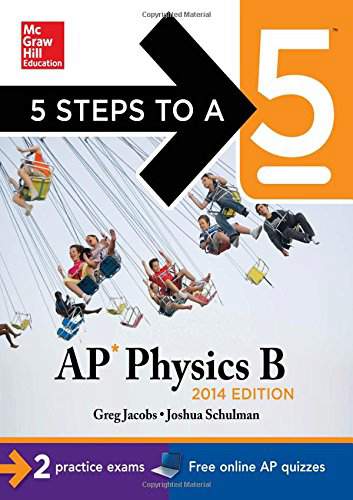
For more information, please see full course syllabus of AP Physics B
For more information, please see full course syllabus of AP Physics B
Share this knowledge with your friends!

Copy & Paste this embed code into your website’s HTML
Please ensure that your website editor is in text mode when you paste the code.(In Wordpress, the mode button is on the top right corner.)
×
Since this lesson is not free, only the preview will appear on your website.
- - Allow users to view the embedded video in full-size.




Start Learning Now
Our free lessons will get you started (Adobe Flash® required).
Sign up for Educator.comGet immediate access to our entire library.
Membership Overview